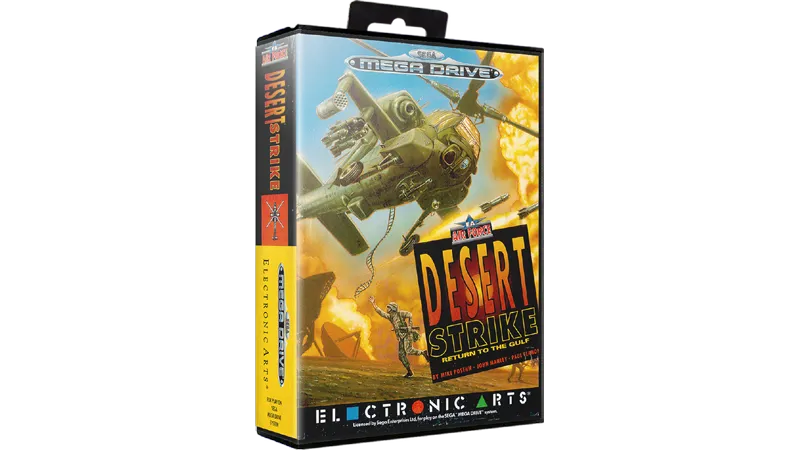
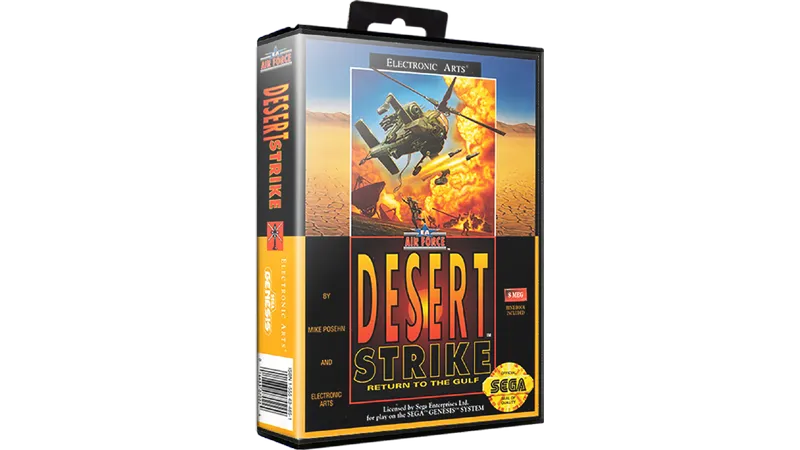
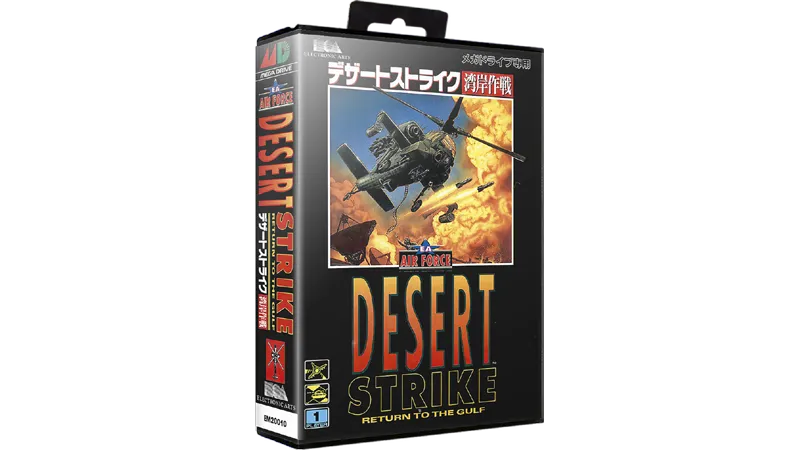



Desert Strike: Return to the Gulf remains one of the most significant titles in the Mega Drive library, marking the moment Electronic Arts transitioned from a PC-centric developer to a console powerhouse. Eschewing the traditional side-scrolling shooter tropes of the era, the game utilizes a sophisticated isometric perspective that grants the player full 360-degree movement over a series of expansive desert maps. As the pilot of an AH-64 Apache, your objective isn't just mindless destruction; success requires careful management of fuel, ammunition, and armor while systematically dismantling the military infrastructure of a fictionalized Middle Eastern dictator across four increasingly complex campaigns.
The technical execution is masterfully handled, featuring a gritty, realistic aesthetic that stood in stark contrast to the colorful mascots of 1992. The animation of the helicopter—tilting as it banks and kicking up dust clouds—provides a sense of weight and momentum that was revolutionary for its time. Sound design plays a crucial role as well, with the constant rhythmic thrum of the rotors creating an atmospheric tension that is punctuated only by the crisp, digitized explosions of enemy bunkers and Scud launchers. The difficulty is steep, demanding precise navigation and tactical prioritization, but the responsive controls ensure that every failure feels like a lesson in strategy rather than a technical flaw.
Looking back, Desert Strike’s legacy is defined by its perfect balance of high-octane action and methodical planning. It pioneered a sub-genre that felt more mature than its contemporaries, rewarding players who studied their tactical maps and plotted efficient routes between landing zones. While later entries in the series would introduce more complex vehicles and locales, the original "Return to the Gulf" retains a purity of design that is still incredibly playable today.