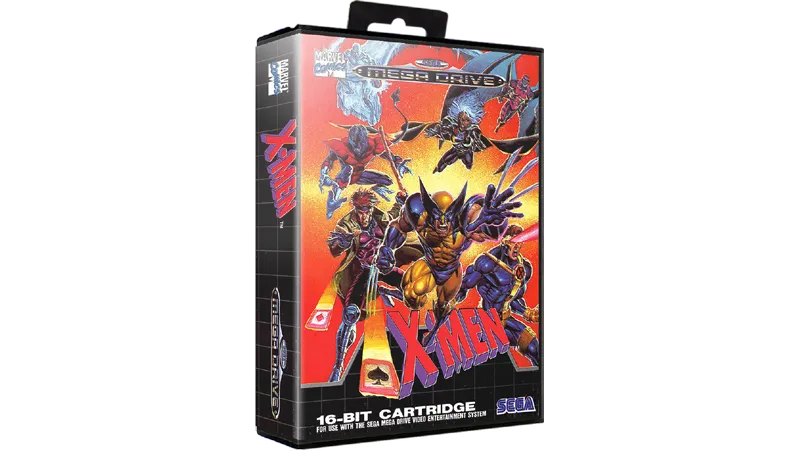



Sega’s 1993 outing for the Uncanny X-Men remains one of the most ambitious licensed titles on the 16-bit hardware, offering a gritty, challenging take on Marvel's mutant heroes. Unlike the brightly colored arcade brawlers of the era, this Mega Drive exclusive leans into a darker aesthetic and punishing difficulty that mirrors the high stakes of the Danger Room. Players can choose between Wolverine, Cyclops, Gambit, and Nightcrawler, each boasting unique mutant powers governed by a depleting energy bar. The level design is expansive and often vertical, requiring a strategic mix of combat and exploration that sets it apart from standard side-scrollers.
Visually, the game pushes the console's color palette to its limits with moody sprites and detailed, if occasionally repetitive, backgrounds. The audio is a standout feature, utilizing the FM synthesis of the YM2612 chip to create a heavy, industrial soundtrack that perfectly complements the metallic halls of the Savage Land and Magneto's orbital base. However, the controls can feel somewhat stiff compared to contemporary platformers, and the boss encounters often devolve into wars of attrition. Despite these flaws, the sheer variety provided by the primary characters and the non-playable cameos—like Storm and Rogue—adds a layer of fan service that was unprecedented at the time.
Perhaps the most famous aspect of X-Men is its meta-textual fourth-wall break during the "Mojo’s Crunch" stage. To proceed, players are famously instructed to "Reset the Computer," a move that actually requires the player to physically press the Mega Drive’s reset button rather than an in-game prompt. It was a risky, innovative piece of design that left many gamers baffled for years, cementing the game's reputation for being truly "hardcore." While its sequel, Clone Wars, would eventually improve the fluidity and animation, this original entry remains a cornerstone of the Sega library, capturing the "Extreme" energy of the early 90s comic book scene with unapologetic intensity.