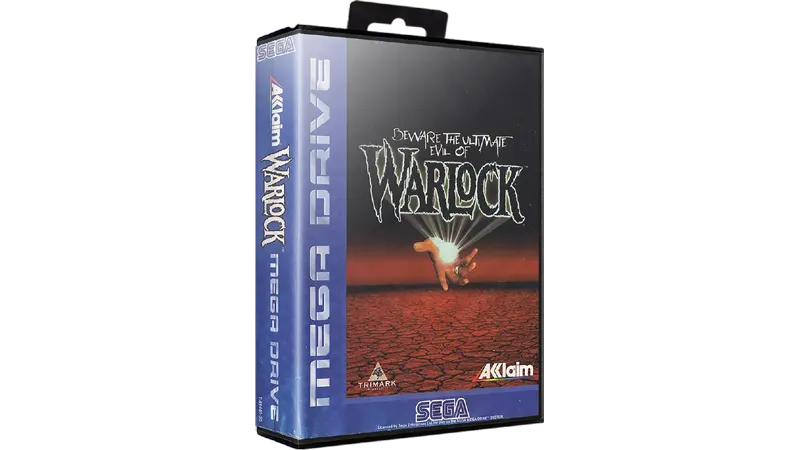
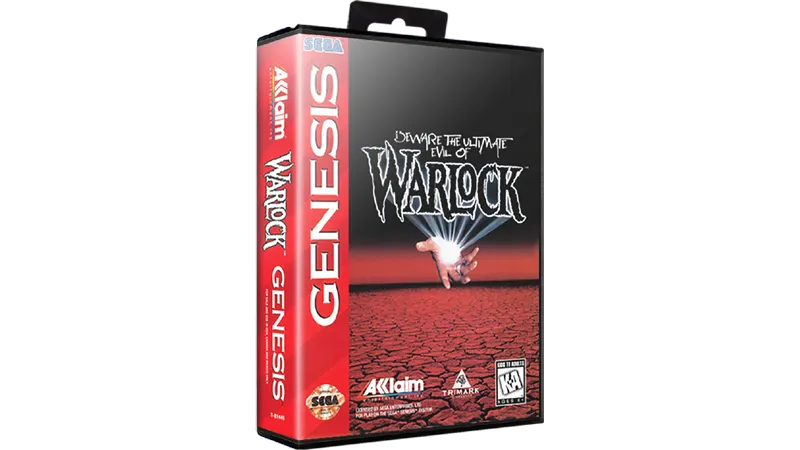



Warlock arrives on the Mega Drive as a dark action-platformer that successfully captures the grim, supernatural atmosphere of its cinematic source material. Players step into the shoes of a modern-day druid tasked with preventing the titular Warlock from gathering six runestones to unleash eternal shadow upon the world. The gameplay centers on a unique magical orb mechanic; rather than standard projectiles, you command a floating sphere to strike enemies, scout ahead, and retrieve items. While the concept is innovative, it lends the combat a deliberate, almost sluggish pace that demands high precision and patient positioning rather than the twitch reflexes found in genre staples.
Visually, the game utilizes the pre-rendered sprite aesthetic that was fashionable in the mid-90s, resulting in detailed character models that aim for a realistic look. The gothic environments are appropriately bleak, filled with crumbling ruins and occult imagery, though the limited color palette of the Mega Drive occasionally makes the screen feel overly muddy. The audio complements the visuals with a haunting, minimalist soundtrack that leans heavily into the horror elements, creating a genuine sense of dread. It is a technically competent port, even if the hardware struggles to maintain clarity during some of the more chaotic boss encounters.
Despite its strong atmosphere and interesting orb-based combat, Warlock is hampered by stiff controls and a punishing difficulty curve that often feels more tedious than challenging. The protagonist moves with a heavy momentum that makes precision platforming or avoiding fast-moving projectiles a chore. While the inclusion of various magical spells adds tactical depth, many players will find the trial-and-error nature of the level design exhausting after the first few stages. It stands as a decent licensed title for those who enjoy slow-burn action games, but it lacks the mechanical polish required to be considered a true classic of the 16-bit era.