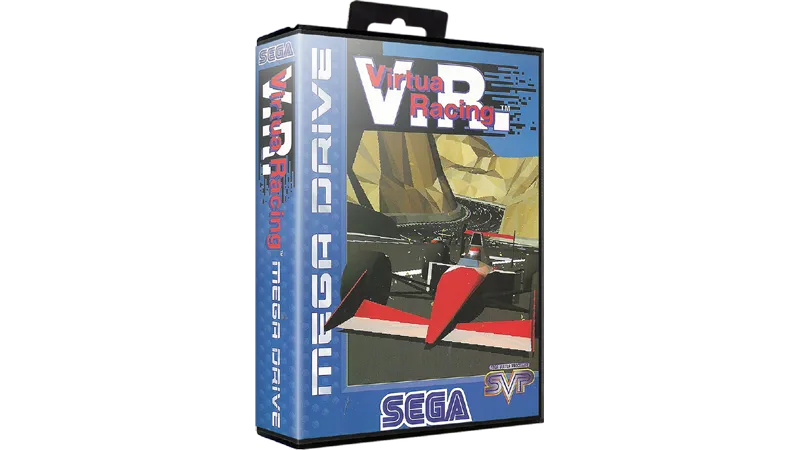


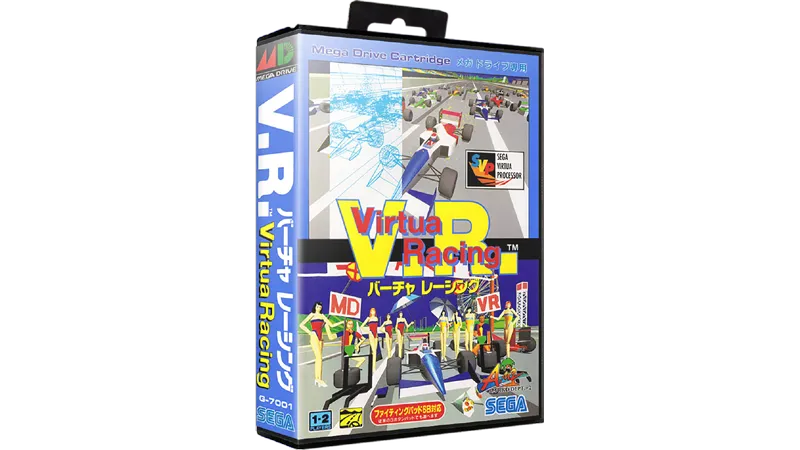

Virtua Racing remains one of the most audacious technical achievements in the history of the 16-bit era. By embedding the proprietary Sega Virtua Processor (SVP) chip directly into the cartridge, Sega managed to bring true 3D polygon graphics to a console never designed to handle them. While the frame rate is significantly lower than its arcade counterpart and the polygon count is stripped back, the core essence of the high-speed Formula One experience is miraculously intact. The sense of scale as you race through the "Big Forest" or under the suspension bridge of "Bay Bridge" was, at the time, something console gamers thought only possible on high-end PCs or the upcoming 32-bit machines.
The gameplay is surprisingly nuanced for an early 3D title, featuring four distinct camera angles and physics that reward precise braking and cornering. The inclusion of the "Acropolis" track offers a genuine challenge, forcing players to master the Mega Drive’s D-pad to navigate tight hairpins that would normally demand an analog stick. Although the flickering of the flat-shaded polygons can be distracting by modern standards, the sheer speed and fluid movement of the rival cars make it an exhilarating drive. It served as a definitive proof of concept that Sega’s arcade mastery could be translated to the home, provided you were willing to pay the premium price for the specialized hardware inside the box.
By the time the Mega Drive library began to wind down in the mid-90s, the focus shifted from high-cost experimental chips to more traditional software. This led to a diverse range of late-cycle releases like the puzzle game Zoop, which arrived for UK and European audiences in 1995 but was notably never released for the console in Japan. Virtua Racing stands in stark contrast to those later budget-friendly titles; it was a high-stakes, high-cost gamble that pushed the 16-bit architecture to its absolute breaking point. Even with the subsequent release of the 32X version, the original Mega Drive port is often preferred by enthusiasts for the sheer wizardry required to make it function on such limited hardware.