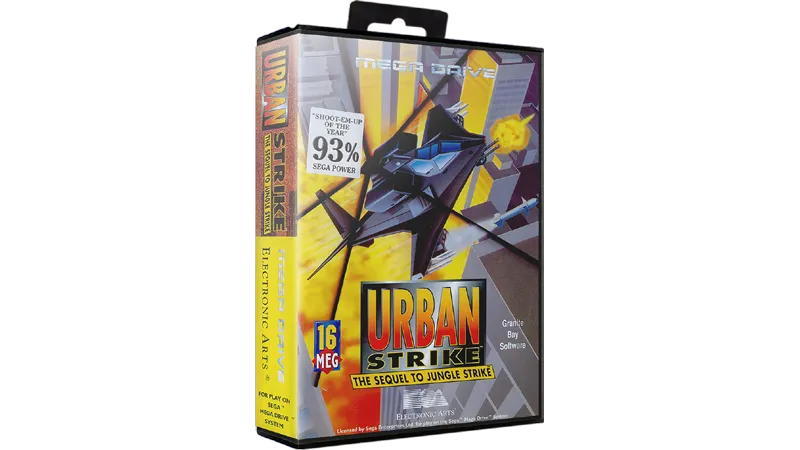

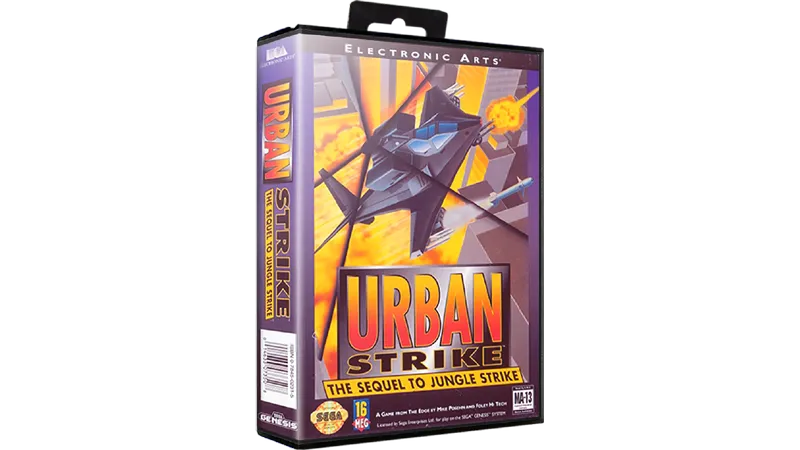


Urban Strike represents the technical pinnacle of EA’s isometric trilogy on the Mega Drive, shifting the theater of war from the dense foliage of its predecessor to the sprawling metropolises of North America. Players once again take command of a high-tech Mohawk helicopter, but the stakes are heightened as they track the megalomaniacal H.R. Malone across iconic locations like Washington D.C. and Las Vegas. The transition to urban environments allowed for more intricate level design, utilizing skyscrapers and tight alleyways to create a claustrophobic sense of tension that was absent in the wide-open deserts and jungles of the previous titles.
The most significant addition to the formula is the introduction of on-foot missions, where the pilot leaves the cockpit to infiltrate buildings and engage in run-and-gun combat. While these segments are sometimes criticized for their stiff controls compared to dedicated action platformers, they provide a necessary change of pace and deepen the narrative's sense of "boots on the ground" urgency. The core aerial gameplay remains as tight as ever, requiring precise fuel, armor, and ammo management, forcing players to prioritize targets and plan their routes across the massive, non-linear maps with tactical precision.
Visually, the game pushes the aging Mega Drive hardware to its limits with impressive sprite scaling during the cinematic mission briefings and highly detailed, destructible environments. The sound design is equally impactful, featuring the signature crunch of digitized explosions and the mechanical thrum of the rotors that defined the series' aesthetic. While the difficulty remains punishingly high, requiring significant trial and error, Urban Strike stands as a triumphant finale to the 16-bit era of the franchise, successfully expanding the scope of its predecessors without losing the tactical edge that made them classics.