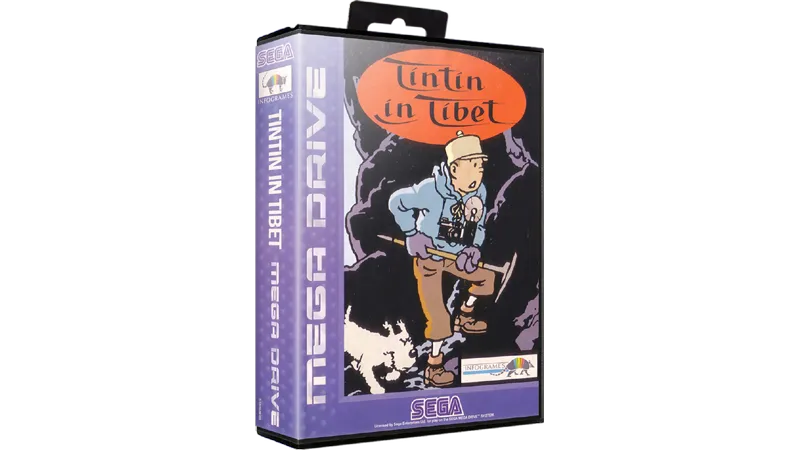



Infogrames was the undisputed master of the "Ligne Claire" aesthetic during the mid-nineties, and Tintin in Tibet stands as a testament to their graphical prowess. Every frame feels like it was ripped directly from Hergé’s 1960 masterpiece, featuring clean character outlines and a sophisticated color palette that pushes the Mega Drive’s hardware to its absolute limit. As Tintin travels from the bustling streets of Kathmandu to the treacherous, snow-capped peaks of the Himalayas, the sheer attention to detail in the background art provides an immersive atmosphere that few contemporary platformers could match.
Beneath the beautiful exterior, however, lies the notorious Infogrames "Euro-platformer" difficulty. The game demands pixel-perfect precision and features unforgiving hitboxes that will test the patience of even the most seasoned veteran. Whether you are navigating the frantic marketplace or surviving the multi-layered mountain climbing sequences, the stiff jumping mechanics and strict time limits create a barrier to entry that often overshadows the charming presentation. It is a cinematic experience first and a balanced game second, requiring rote memorization and absolute mastery of the controls to progress past the early stages. For collectors, Tintin in Tibet remains a definitive example of late-generation technical wizardry, proving that while the 16-bit era was ending, the Mega Drive still had the legs to produce breathtaking, comic-accurate visuals.