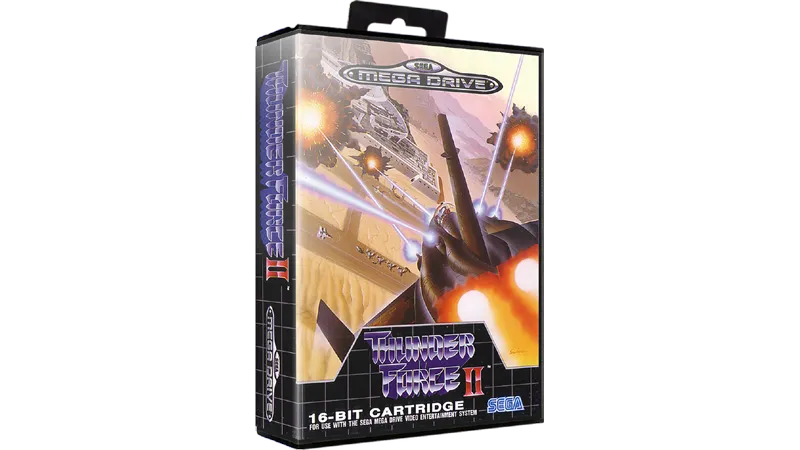


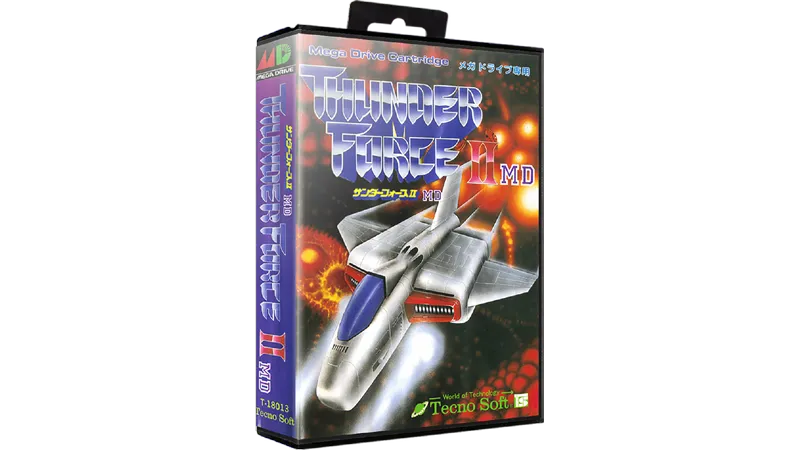

Thunder Force II arrived as a technical showcase for the fledgling Mega Drive, serving as a direct port of the Sharp X68000 original. As a launch window title, it effectively demonstrated the hardware's ability to handle fast-paced arcade action and complex sprite-work with minimal slowdown. While it retains the experimental overhead stages that characterized the series' infancy, it laid the essential groundwork for the horizontal-scrolling mastery that would eventually define the franchise's peak on the 16-bit hardware.
The game’s unique hook is its alternating level structure, which splits the experience between two distinct playstyles. Players begin each mission in an "overhead" stage, navigating a 360-degree environment to destroy specific ground bases before transitioning into the classic side-scrolling shooter format. The weapon system is already sophisticated for its time, offering a variety of power-ups like the Wide shot and Hunter missiles that remain active until the ship is destroyed. However, the top-down sections can feel somewhat disorienting and lack the precision found in the focused intensity of the side-scrolling segments.
Technosoft’s legendary sound team delivers an aggressive, bass-heavy FM synth soundtrack that pushes the Mega Drive’s YM2612 chip to its limits, featuring some of the most iconic "slap bass" samples in gaming history. Visually, the parallax scrolling and distinct mechanical boss designs set a high bar for 1989, though the difficulty curve is notoriously steep and requires significant memorization. While eventually surpassed by its sequels, Thunder Force II remains a vital piece of shooting history, representing the moment the series' identity truly crystallized on home consoles.