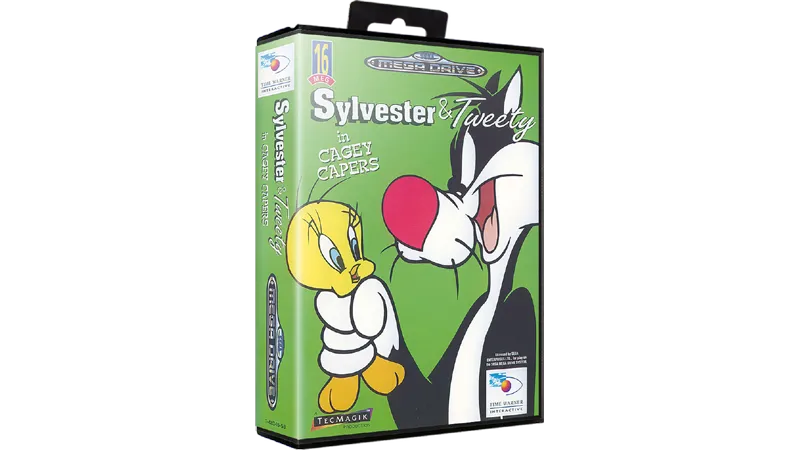
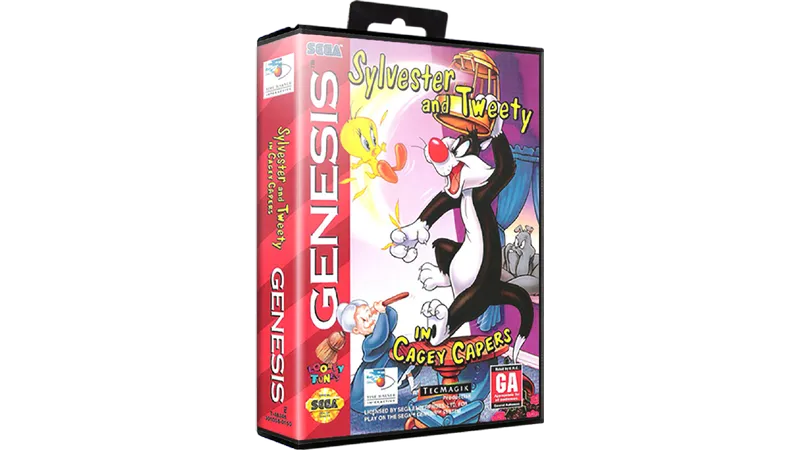



Sylvester and Tweety in Cagey Capers, released by TecMagik in 1994, is a visually striking attempt to translate the slapstick energy of Looney Tunes into a 16-bit platformer. Visually, the game excels with large, expressive sprites and background art that mirrors the classic hand-drawn animation style of the Warner Bros. cartoons. Each level tasks the player, controlling a determined Sylvester, with navigating domestic environments and outdoor settings to capture the elusive Tweety. The presentation is genuinely impressive, utilizing the Mega Drive's color palette effectively to create a Saturday morning cartoon atmosphere that remains one of the console's most visually faithful licensed properties.
Despite the aesthetic polish, the gameplay mechanics often feel as clumsy as Sylvester himself. The feline protagonist has a heavy, somewhat sluggish movement speed, and his primary means of offense—a simple claw swipe—requires precise positioning that the engine doesn't always accommodate. Players must manage a stamina bar that limits sprinting and jumping, adding a layer of resource management that feels slightly at odds with the frantic nature of a cartoon chase. The level design emphasizes exploration and using items like umbrellas or pogo sticks, but the frustrating collision detection and repetitive enemy placements frequently hinder the enjoyment of these environmental puzzles.
While it may not reach the legendary heights of Konami's Tiny Toon Adventures or Sunsoft’s Looney Tunes titles, Cagey Capers is a respectable mid-tier platformer that captures the license’s humor perfectly. The difficulty is surprisingly high, often due to technical shortcomings rather than intentional design, which might alienate younger fans of the source material. However, for those who grew up with the rivalry, there is a nostalgic charm in the various death animations and the sheer persistence required to corner that canary. It is a solid, if flawed, piece of 16-bit history that prioritizes character accuracy over fluid control.