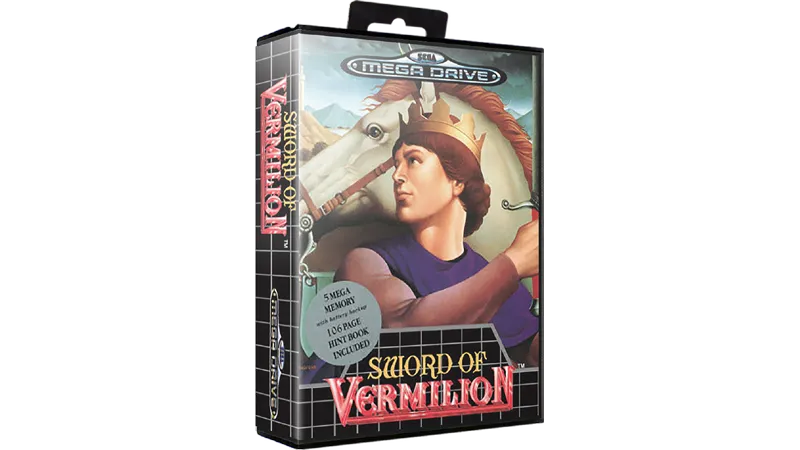


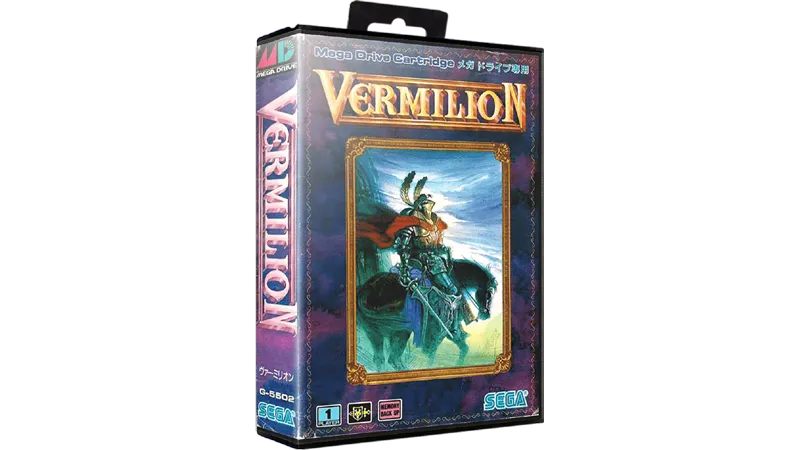

Released as one of the early flagship RPGs for the Sega Mega Drive, Sword of Vermilion represents a bold, multi-perspective experiment from Yu Suzuki and his legendary AM2 team. Eschewing the traditional bird's-eye view for much of its runtime, the game shifts between first-person dungeon crawling, top-down overworld traversal, and side-scrolling boss encounters. This stylistic ambition was Sega's attempt to provide a mature, cinematic alternative to the turn-based dominance of Dragon Quest and Final Fantasy, resulting in a dark, atmospheric journey that felt remarkably distinct from its peers in 1990.
While the graphical shifts are impressive, the gameplay loop relies heavily on real-time combat and an intense amount of grinding. Battles occur in an overhead arena where the player must maneuver and strike with clunky, somewhat stiff movements, making the early game particularly punishing for the uninitiated. However, the depth provided by the magic system—represented by various "titans"—and the intricate town exploration adds a layer of sophistication. The soundtrack by Hiroshi Kawaguchi is a particular highlight, delivering moody, driving synth melodies that perfectly capture the isolation of the Prince’s quest to reclaim the kingdom of Excalabria.
Today, Sword of Vermilion is remembered as a polarizing pioneer that prioritizes atmosphere over polished mechanics. The first-person corridors can become repetitive, and the encounter rate is notoriously high, yet there is an undeniable charm to its grim world and the sheer variety of its presentation. For the Sega enthusiast, it remains a vital historical artifact that demonstrates the experimental spirit of the 16-bit era, proving that even the genre’s most standard "lost prince" tropes could be revitalized through innovative, if occasionally awkward, technical ambition.