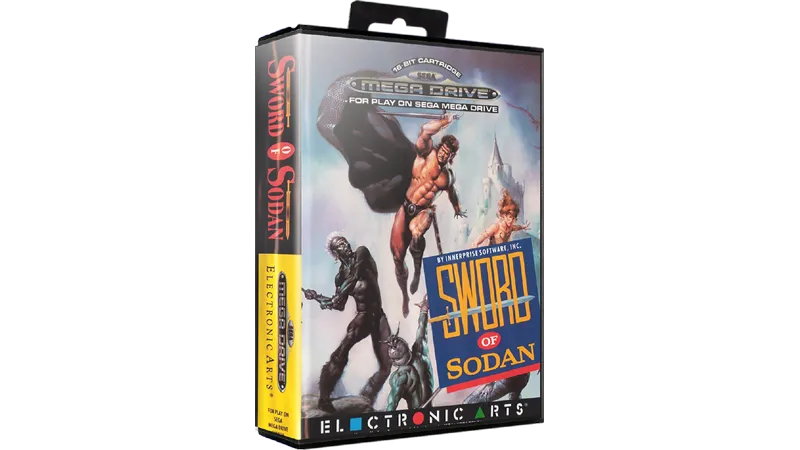


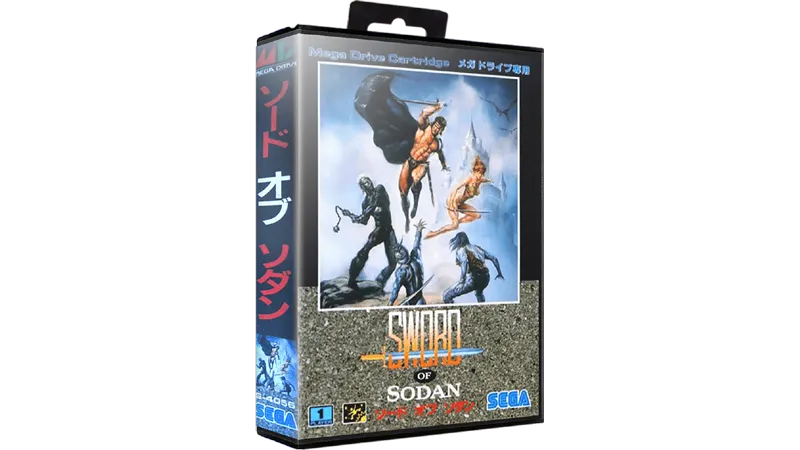

Sword of Sodan arrived on the Mega Drive with a reputation established on the Amiga, promising massive character sprites and a gritty, barbarian-themed hack-and-slash experience. Electronic Arts handled the porting duties, attempting to squeeze the high-fidelity aesthetics of the original computer version into a cartridge format. While the game certainly succeeded in filling the screen with towering gladiators and grotesque monsters, the transition stripped away the fluidity and atmospheric depth that made the original notable. Players take control of either Brodan or Shardan, embarking on a quest to avenge their father, but the heroic scale is immediately undermined by a staggering lack of technical polish.
The gameplay mechanics are notoriously stiff, turning what should be a visceral combat experience into a chore of precision and patience. Combat revolves around basic stabs and overhead swings, but the hit detection is abysmally inconsistent, often resulting in cheap deaths from projectiles or encroaching enemies. A rudimentary potion-mixing system offers some depth, allowing players to create power-ups or screen-clearing spells, yet this feature feels like an afterthought compared to the constant struggle against the game’s rigid movement. The impressive size of the sprites actually works against the title, as the Mega Drive struggles with flicker and a cramped field of view that leaves little room for tactical maneuvering.
Ultimately, Sword of Sodan stands as one of the most disappointing titles in the 16-bit library, serving as a cautionary tale of style over substance. While it briefly turned heads in 1990 with its visual ambition, the lack of fun factor and the frustrating difficulty spikes make it a difficult game to revisit. It lacks the kinetic energy of Golden Axe or the refined combat of Streets of Rage, leaving it relegated to the status of a curiosity for collectors. Historically, while later system releases like Zoop in 1995 saw a UK and European launch but bypassed the Japanese Mega Drive entirely, Sword of Sodan remains a localized Western failure that never found its footing in any territory.