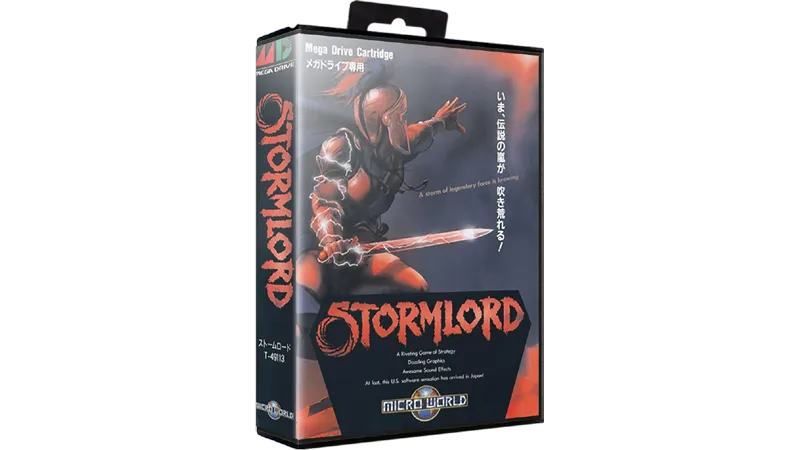

Originally a hit on the ZX Spectrum and Amiga, Storm Lord’s transition to the Mega Drive retains the distinctive European "Euro-platformer" DNA that defines the work of legendary programmer Raffaele Cecco. As the titular bearded warrior, players navigate a grim, mythological landscape characterized by detailed, albeit somewhat static, backdrops and a moody color palette that pushes the console’s aesthetic in favor of grit over vibrancy. While it lacks the fluid momentum of Japanese contemporaries like Shinobi III, its atmosphere remains striking, offering a dark fantasy vibe that felt mature and slightly transgressive for the early 1990s.
The core loop involves platforming and projectile combat, with the primary objective being the rescue of captured fairies within a strict time limit. This is where the game’s notorious difficulty spike occurs; enemies respawn with punishing frequency, and the level design requires pixel-perfect jumping that often feels unforgiving due to the slightly stiff character animations. It is a game of memorization rather than pure reflex, demanding that players learn enemy patterns and item placements through repeated failure, a hallmark of the era's British coding scene that will either alienate modern players or provide a satisfyingly nostalgic challenge for veterans.
Despite its technical limitations and somewhat clunky controls, Storm Lord remains a fascinating artifact of the early 16-bit era, showcasing a different design philosophy than the more polished arcade-style offerings from Sega or Capcom. The Mega Drive version benefits from enhanced audio and slightly smoother scrolling compared to its 8-bit predecessors, yet it never quite sheds its home-computer roots. It is a cult classic that prioritizes atmosphere and high-stakes exploration, making it an essential play for those interested in the history of European software development on Japanese hardware.