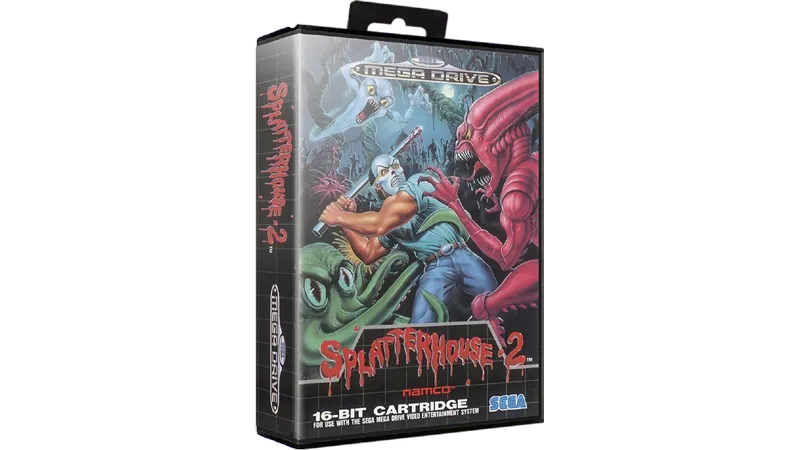



Splatterhouse 2 remains one of the most unapologetically visceral experiences on the Sega Mega Drive, picking up three years after the original carnage. Rick Taylor is once again beckoned by the Terror Mask to return to the ruins of the West Mansion to save Jennifer, setting the stage for a sequel that doubles down on the "splatter" motif. While the visuals retain the grim, muddy palette of the first game, the Mega Drive’s hardware allows for larger sprites and more detailed grotesquerie, from the pulsating walls of living flesh to the skinless abominations that stalk the hallways. It successfully captures the 80s slasher-flick aesthetic, providing a dark alternative to Sega's more colorful platforming mascots.
Mechanically, the game is a rigid but satisfying side-scroller that demands precision and pattern memorization rather than frantic button-mashing. Rick’s move set is intentionally heavy, making every slide-kick and pipe-swing feel impactful, though the high difficulty curve and limited continues can be off-putting for modern players. The boss encounters remain the highlight, featuring disturbing designs like the "hanging man" or the iconic fetal monstrosities that require specific positioning and timing to defeat. The sound design complements the carnage perfectly; the squelching sound effects and the haunting, synth-driven score create an oppressive atmosphere that few games of the era could match.
Despite its linear nature and punishing trial-and-error gameplay, Splatterhouse 2 stands as a pinnacle of horror on 16-bit consoles. It didn't reinvent the wheel, but it refined the atmosphere of the arcade predecessor and paved the way for the more experimental third entry. For collectors, it has become a holy grail of sorts, representing a time when Namco was willing to push the boundaries of "acceptable" content on home consoles. It is a grim, essential piece of Sega history that proves terror doesn't need high-definition polygons to be effective—only a mask, a heavy wooden plank, and a lot of gore.