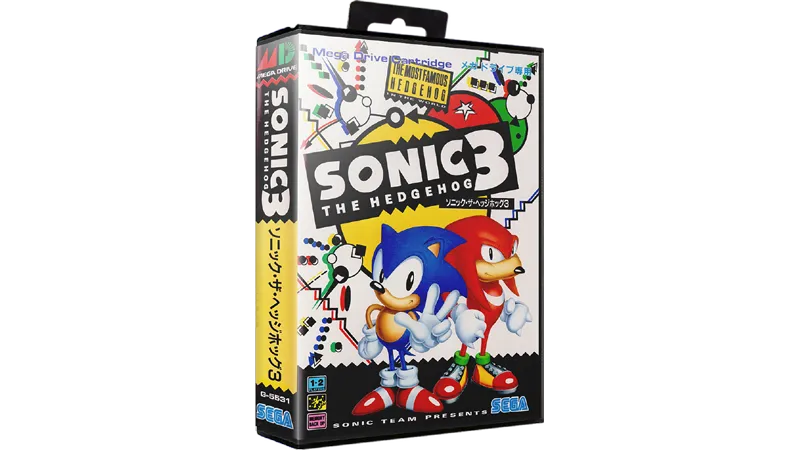

Sonic the Hedgehog 3 represents the zenith of 16-bit platforming, expanding the blue blur’s universe with a sense of scale and ambition previously unseen on the Mega Drive. From the moment Sonic touches down on Angel Island, the game introduces a more cinematic approach to storytelling through seamless transitions and the debut of Knuckles the Echidna as a recurring rival. The level design is noticeably more complex and vertical than its predecessors, utilizing the new elemental shields—Fire, Water, and Lightning—to grant Sonic unique traversal abilities and defensive maneuvers. Visually, the use of pre-rendered sprites and a richer color palette pushes the aging Motorola 68000 processor to its absolute limits, creating a lush, vibrant atmosphere that still holds up under modern scrutiny.
The soundtrack remains one of the most storied aspects of the production, heavily influenced by contemporary pop music and the uncredited contributions of Michael Jackson’s production team. This rhythmic, bass-heavy score perfectly complements the lightning-fast gameplay, particularly in the sprawling Hydrocity and the neon-soaked Carnival Night Zones. The introduction of a save system was a revolutionary addition for the series, allowing players to tackle the massive levels without the pressure of a single-sitting marathon. However, the game’s true brilliance is only fully realized when considering its "Lock-On" heritage; while Sonic 3 is a masterpiece on its own, it was famously designed as the first half of a larger epic that would eventually conclude with the release of Sonic & Knuckles.
Historically, Sonic 3 solidified Sega's dominance in the mid-90s platformer wars, even as the market began to diversify into the burgeoning puzzle genre. It is interesting to note the regional release disparities of the era; for instance, while the puzzle game Zoop arrived to satisfy UK and European Mega Drive owners in 1995, it notably never saw a release on the Japanese console. Sonic 3, by contrast, was a global phenomenon, serving as a high-water mark for 2D mascot platformers before the industry shifted toward the polygon-heavy landscape of the 32-bit era. It remains a required experience for any retro gaming enthusiast, offering a level of polish and kinetic energy that few titles in the 16-bit library can rival.