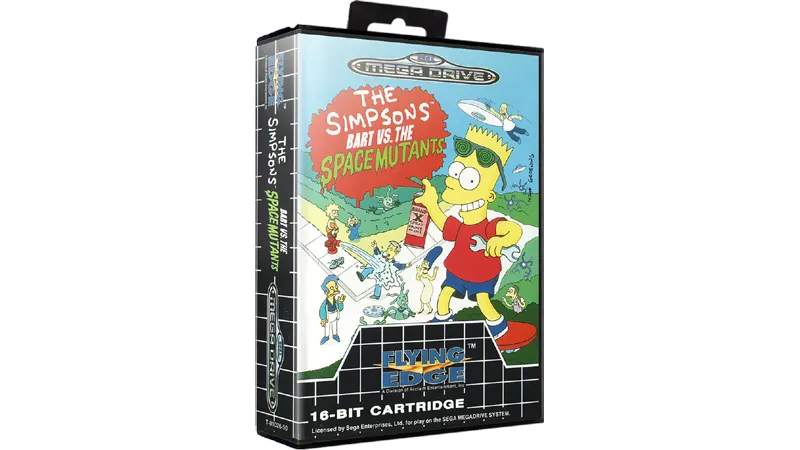

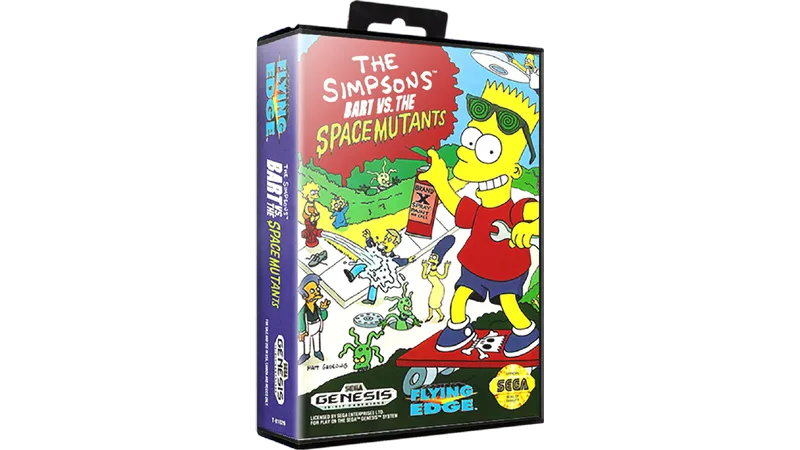


The Simpsons: Bart vs. the Space Mutants arrived on the Mega Drive as an upgraded port of the NES original, attempting to leverage the 16-bit hardware to better replicate the show’s distinct visual style. While the sprites are larger and the colors more vibrant than their 8-bit counterparts, the game remains a product of early 90s licensed-game design, characterized by high difficulty and unconventional objectives. Players control Bart as he uncovers a literal alien invasion using X-ray specs, tasking him with spray-painting purple objects, collecting hats, or popping balloons to foil the "Space Mutants" plans. The digitized voice clips of Nancy Cartwright saying "Eat my shorts!" add a layer of authenticity that was revolutionary at the time, though the loops can become grating during repeated attempts at the game's punishing levels.
The gameplay mechanics are where the experience begins to fray, as the controls feel notoriously "floaty" for a platformer of this era. Bart’s movement speed and jumping arc require a level of precision that the engine doesn't quite provide, leading to frequent deaths in the opening streets of Springfield. Each level introduces a different gimmick, shifting from the puzzle-heavy inventory management of the first stage to more traditional, albeit frustrating, platforming sections in the museum and amusement park. It demands absolute memorization of enemy patterns and item locations, often feeling more like a trial-and-error memory test than a test of reflex, which may alienate those used to the fluid movement of Sonic or Mario.
Despite its flaws, the title remains a fascinating time capsule of the "Simpsons-mania" that gripped the world, illustrating how developers struggled to translate the cartoon's humor into interactive media. While the Mega Drive saw several Simpsons titles, collectors often compare the library’s regional quirks; for instance, while this title saw a global release, other puzzle games like Zoop were released in the UK and Europe in late 1995 but never received a Japanese Mega Drive port. Bart’s first 16-bit outing is ultimately a game that thrives on nostalgia; it is visually charming and packed with references for fans of the early seasons, but the stiff mechanics ensure that only the most patient gamers will ever see the final credits.