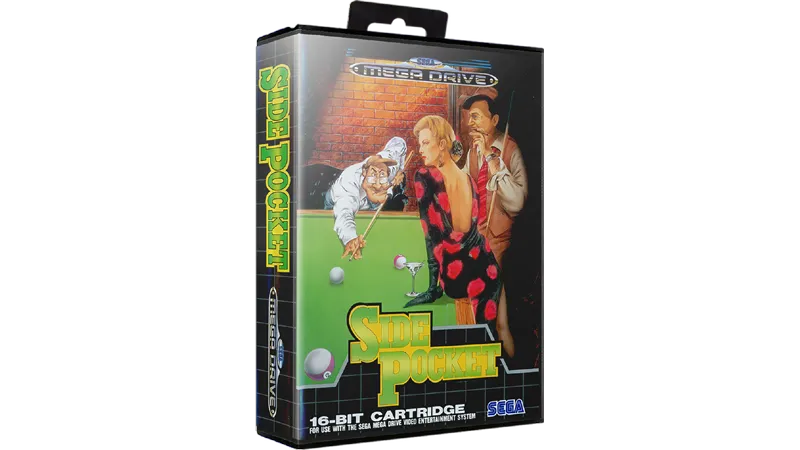


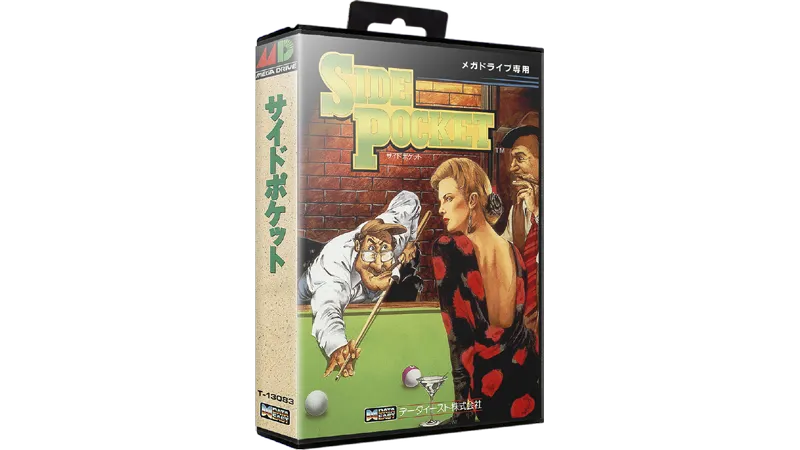

Side Pocket on the Mega Drive stands as a masterclass in translating the chill, smoke-filled atmosphere of an American pool hall into 16-bit code. Unlike many sports titles that focus on frantic action, Data East opted for a sophisticated "lounge" vibe, backed by an incredibly memorable acid-jazz soundtrack that remains a highlight of the console’s sound chip capabilities. The physics engine is surprisingly robust for 1992, offering players a high level of precision regarding cue ball spin—referred to as "English"—and power control that makes every successful bank shot feel earned rather than accidental.
The core experience revolves around a single-player journey through various American cities, where players must clear a specific number of balls within a limited shot count to progress. This adds a puzzle-like layer to the traditional billiards gameplay, forcing strategic thinking and careful planning over raw clearing speed. The inclusion of the "Trick Shot" bonus stages provides a welcome break from the standard game, challenging players to master the game's physics through increasingly complex and creative setups. While the two-player mode is a standard staple, the solo campaign’s progression system ensures there is enough depth to keep long-term players engaged beyond a simple weekend session.
Technically, the game is polished and minimalist, featuring large, clear sprites and a user interface that stays out of the way of the action. It avoids the clutter common in early 90s sports simulations, leaning into an aesthetic that has aged significantly better than many of its 16-bit contemporaries. While some modern players might find the pace too leisurely, it captures the "pick up and play" essence of the Mega Drive perfectly. It remains an essential title for those who value atmosphere and precision, proving that even a simple game of pool can be elevated to an art form through style and tight execution.