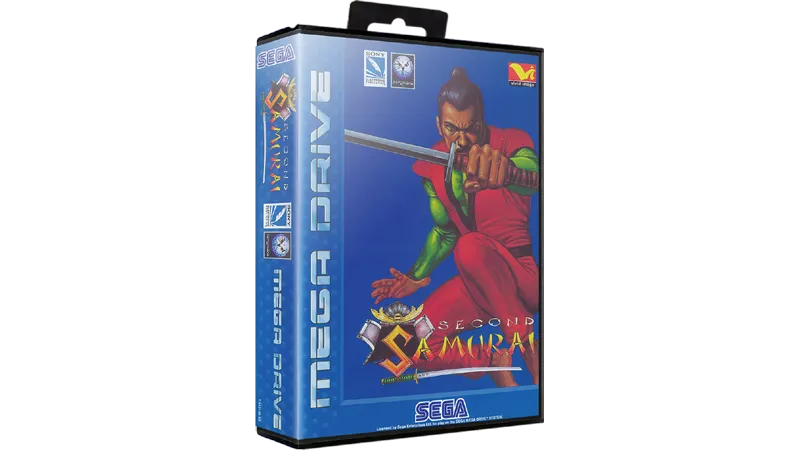



The Second Samurai serves as a bold, eccentric sequel to its predecessor, successfully migrating the Amiga’s distinct European flair to Sega's 16-bit hardware. As players guide their warrior through a bizarre collision of feudal Japan and high-tech environments, the gameplay emphasizes fast-paced swordplay and projectile combat. While the original relied heavily on fixed screen-clearing objectives, this follow-up leans into more traditional side-scrolling exploration, offering a sense of scale and momentum that few contemporary hack-and-slash titles managed to achieve on the platform.
Visually, the title carries the unmistakable DNA of developer Vivid Image and publisher Psygnosis, featuring rich color palettes and large, expressive sprites. The transition to the Mega Drive resulted in a remarkably fluid experience, maintaining the Amiga’s impressive parallax scrolling and intricate background detail without significant compromise. The sound design is equally evocative, utilizing the console's FM synthesis to deliver a moody, percussion-heavy soundtrack that perfectly complements the frantic action, ensuring the atmospheric tension remains high throughout the journey across time.
Perhaps the most significant addition to this sequel is the inclusion of a cooperative two-player mode, which transforms the experience from a lonely quest into a chaotic, shared brawl. While the platforming can occasionally feel "floaty" compared to Japanese-developed staples like Shinobi III, the sheer variety of levels and oddball enemy designs keep the interest piqued. By the time the console entered its twilight years in 1995—a year defined by late-cycle regional releases like the puzzle-hit Zoop, which saw a UK arrival but skipped the Japanese Mega Drive entirely—The Second Samurai had already established itself as a premier example of Western-developed mastery on Sega's hardware.