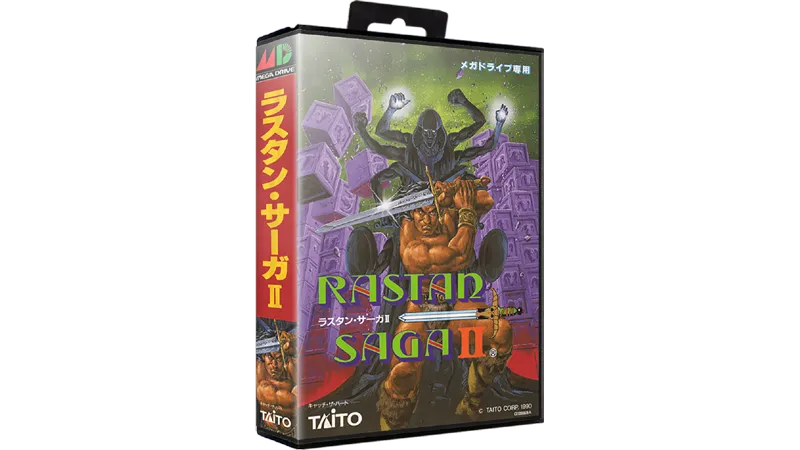

Rastan Saga 2, also known as Nastar in arcades, serves as a prequel to the legendary barbarian hack-and-slash that defined Taito's early fantasy output. While the original was a masterclass in atmospheric platforming, this Mega Drive port attempts to scale the experience up with massive character sprites and bold, neon-soaked environments. The transition to SEGA’s 16-bit hardware maintains the arcade's oversized aesthetic, offering a "heavyweight" feel where every screen is dominated by the protagonist and his monstrous foes. However, this shift in scale proves to be a double-edged sword, as the limited screen real estate often makes the action feel cramped and claustrophobic compared to the expansive horizons of the first game.
The gameplay experience is hampered by a deliberate, almost sluggish pace that lacks the precision of its predecessor. Unlike the fluid strikes found in the 1987 original, the protagonist’s movements here feel encumbered, and the hit detection is notoriously fickle. The addition of a shield mechanic and various power-ups adds some tactical depth, but the stiff jumping physics turn the occasional platforming sections into a frustrating exercise in trial and error. It is a technically competent port of the arcade source material, but that source material was a controversial departure that traded the dark, Conan-inspired grit for a louder, more garish presentation that many fans found inferior.
Despite its mechanical shortcomings, the title remains a fascinating specimen of early 1990s arcade-to-home development. It highlights the strange regional discrepancies of the era; for example, while the puzzle game Zoop saw a late 1995 release in the UK and Europe, it was never released in Japan for this console, showcasing how differently markets were treated. Rastan Saga 2 is ultimately a visual curiosity that fails to provide the mechanical satisfaction required to stand alongside the Mega Drive’s top-tier action titles. It is a loud, colorful, yet hollow sequel that serves as a reminder that increasing sprite size often comes at the direct expense of gameplay fluidity.