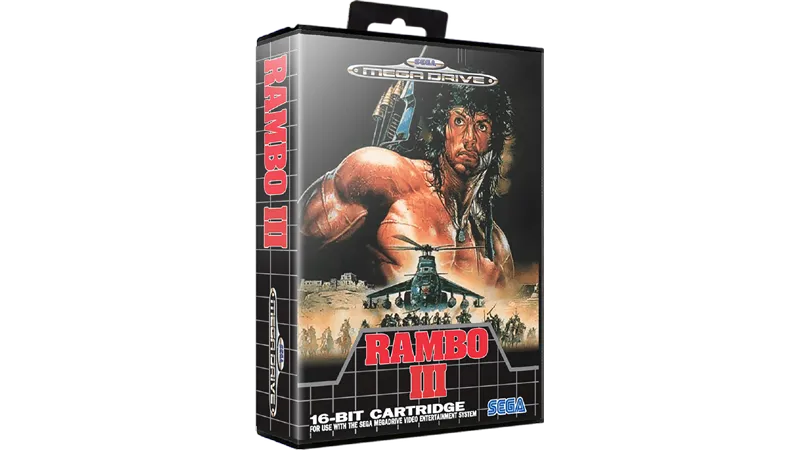


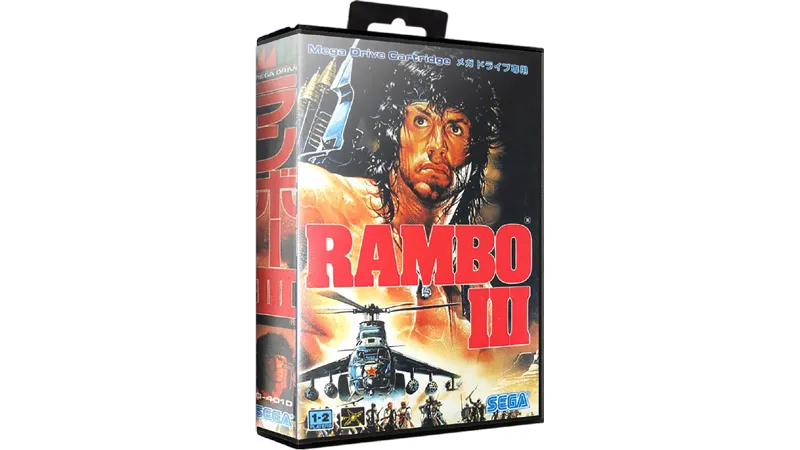

Released in 1989 as a showcase for the Mega Drive’s early processing power, Rambo III successfully transitions the cinematic intensity of the Stallone blockbuster into a frantic, top-down run-and-gun experience. Eschewing the side-scrolling platforming seen in many contemporary action titles, this overhead perspective allows for multi-directional combat as you navigate the Soviet-occupied deserts of Afghanistan. The gameplay is lean and focused, tasking players with rescuing Colonel Trautman through six high-stakes missions that emphasize environmental destruction and unrelenting enemy waves. For an early 16-bit title, the sprite work is remarkably clean, and the game manages to maintain a fluid frame rate even when the screen is crowded with explosions and infantry.
The mechanics are built around a satisfying loop of resource management and firepower, utilizing a primary machine gun alongside the iconic explosive-tipped arrows for heavy ordinance. These arrows are essential for the game’s unique boss encounters, which shift the perspective to a pseudo-3D "behind the back" view, requiring players to time their shots against tanks and Hind helicopters. While the level design can occasionally feel linear and the color palette is heavily dominated by desert ochres and military greens, the tight controls and escalating difficulty curve provide a genuine challenge. It is a quintessential example of Sega’s early "arcade at home" philosophy, delivering a visceral experience that prioritizes momentum over complex narrative.
Today, Rambo III stands as one of the more competent licensed games of the era, avoiding the typical pitfalls of movie tie-ins by leaning into proven arcade mechanics. While it was eventually eclipsed in complexity by titles like Mercs or Desert Strike, its pure, unadulterated focus on being a one-man army remains highly playable. It remains a definitive piece of the Mega Drive’s early library, capturing the gritty, aggressive spirit that Sega used to differentiate itself from Nintendo in the late eighties. Whether you are a fan of the franchise or just a devotee of retro action, the game’s explosive pacing ensures it still packs a significant punch decades later.