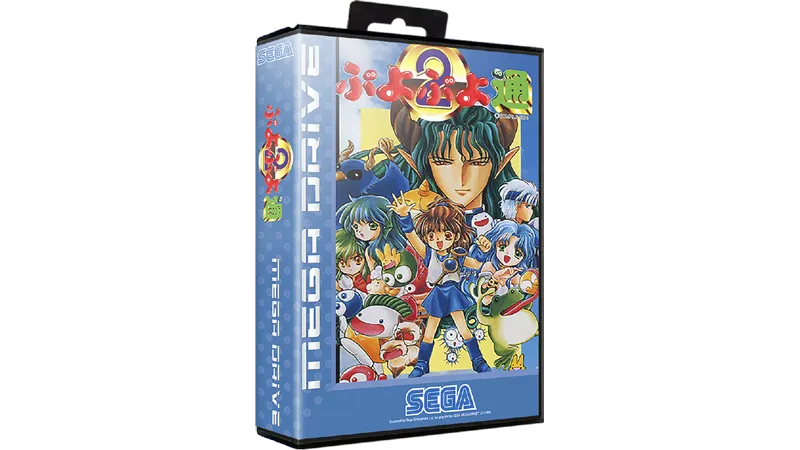



Puyo Puyo Tsuu is arguably the pinnacle of competitive puzzle gaming on the Mega Drive, refining a formula that was already addictive into something truly legendary. The most significant addition is the "Sousai" or offsetting mechanic, which allows players to negate incoming garbage blocks by completing their own chains simultaneously. This transformed the game from a simple speed-race into a tactical back-and-forth struggle, cementing its place in arcade and console history as the gold standard for the genre and a fixture in the competitive scene for decades.
Visually, the game bursts with 16-bit personality, featuring a vast roster of eccentric opponents ranging from the iconic Arle Nadja to the bizarre, curry-loving Nohoho. Each character brings a unique AI pattern and charm, accompanied by catchy FM-synth tracks that perfectly capture the frantic pace of high-level play. While the core gameplay remains simple to grasp—matching four colors to pop them—the depth required to master the "stairs" and "sandwich" stacking methods provides an incredibly high skill ceiling that few other titles can match.
During the mid-90s, the puzzle landscape was surprisingly divided across global territories. While Japanese players were perfecting their chains in this 1994 masterpiece, European Mega Drive owners were introduced to the unconventional, four-way puzzler Zoop in 1995. Interestingly, while Zoop found its way to UK shores via Viacom, it never received a release for the Japanese Mega Drive, leaving a distinct cultural gap where Puyo Puyo Tsuu reigned supreme as the undisputed king of the Eastern puzzle market.