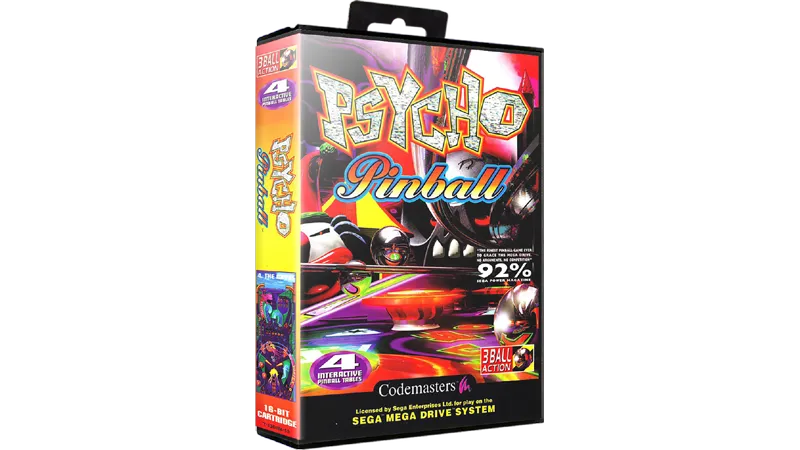



Codemasters brought their A-game with Psycho Pinball, a title that often sits at the very top of the 16-bit pinball hierarchy. Unlike its contemporaries that stuck to single-screen layouts or basic scrolling, this game features a central "hub" table—the titular Psycho table—which allows players to travel to three other distinct environments: Wild West, Trick or Treat, and The Abyss. This interconnected structure provides a sense of progression and scale rarely seen in the genre at the time, making it feel more like an arcade adventure than a simple score-chaser.
The physics engine is remarkably refined for the Mega Drive, offering a sense of ball weight and momentum that avoids the floatiness found in Sonic Spinball. Each table is packed with secrets, including a variety of quirky mini-games that take place on the dot-matrix display or within the table itself, such as dodging traffic or shooting targets. The visuals are vibrant and take full advantage of the console’s palette, while the energetic soundtrack keeps the pace frantic, ensuring that the gameplay remains engaging even during long sessions.
While it may not have the license of a major movie or band, Psycho Pinball thrives on its original personality and polished execution. It stands as a testament to Codemasters' ability to push the Mega Drive hardware toward the end of its commercial life, delivering an experience that arguably rivals the Pinball Dreams series on the Amiga. It is an essential pick-up for any genre enthusiast, providing a level of depth and replayability that few other titles on the platform can match.