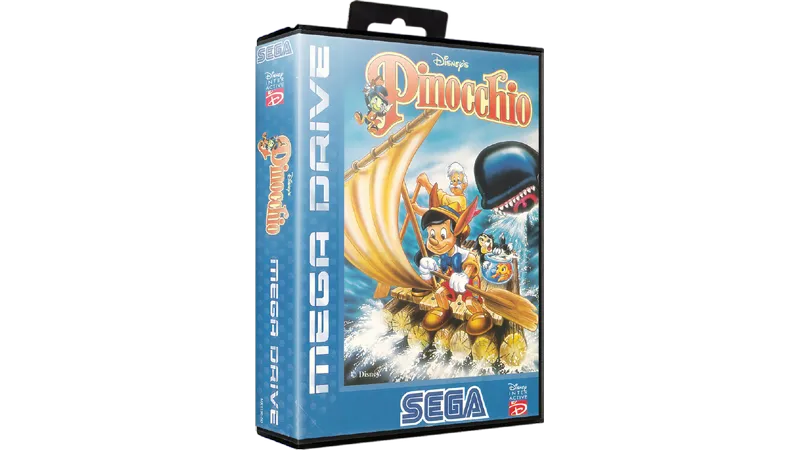

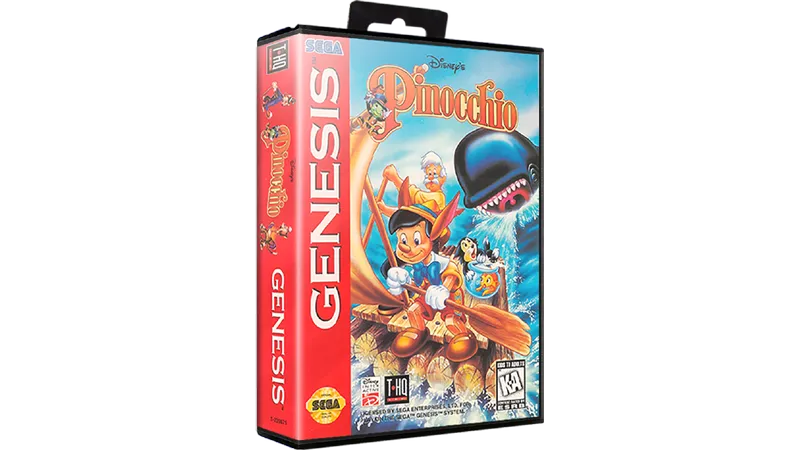


Released toward the sunset of the 16-bit era, Disney’s Pinocchio is a technical marvel that pushed the Mega Drive hardware to its absolute limits. Utilizing the same "Digicel" process that made Aladdin a cinematic success, the game features exceptionally fluid, hand-drawn animations that replicate the 1940 film’s aesthetic with startling accuracy. Unlike many licensed titles of the period that relied on recycled assets, the production values here are incredibly high, featuring lush multi-scrolled backgrounds and expressive character sprites that breathe life into the wooden protagonist as he journeys toward becoming a real boy.
The gameplay is surprisingly varied, shifting from standard platforming to stealth-based segments in the puppet theater and even rhythm-action mini-games. Players navigate through iconic locales such as the dark woods and the terrifying Pleasure Island, where Pinocchio must evade donkey transformation. While the controls are generally responsive, the game suffers from a punishing difficulty curve and some occasionally obtuse objective logic that was common for Virgin Interactive titles of the mid-90s. Interestingly, while puzzle fans in 1995 were distracted by the release of Zoop—which saw a successful launch in the UK and Europe but notably never arrived in Japan for the Mega Drive—Pinocchio remained a solid, if overlooked, swan song for Disney on the aging platform.
Despite its late 1996 release, the game remains a testament to the longevity of the Motorola 68000 processor. It captures the dark undertones of the original source material while providing a visual feast that few other 16-bit titles could hope to match. The level design is clever, though it requires a high degree of patience and precision that might alienate younger players. For collectors of the "Disney era" of 2D platformers, it is an essential piece of history, representing the absolute pinnacle of visual fidelity before the industry shifted its focus toward the 32-bit generation and the dawn of 3D polygons.