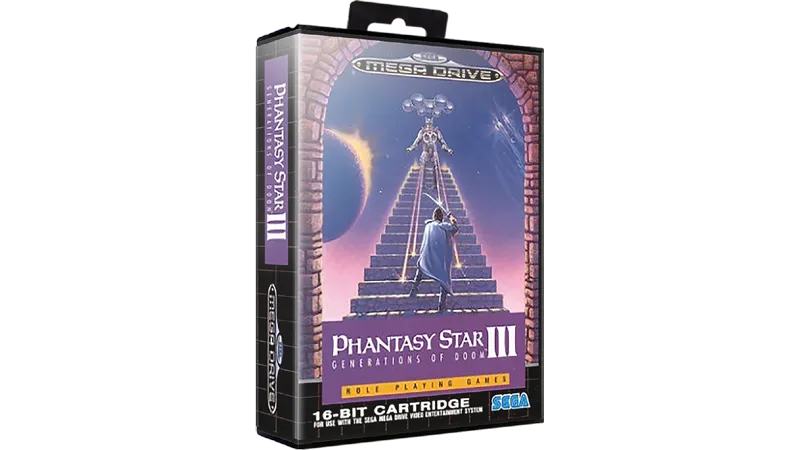

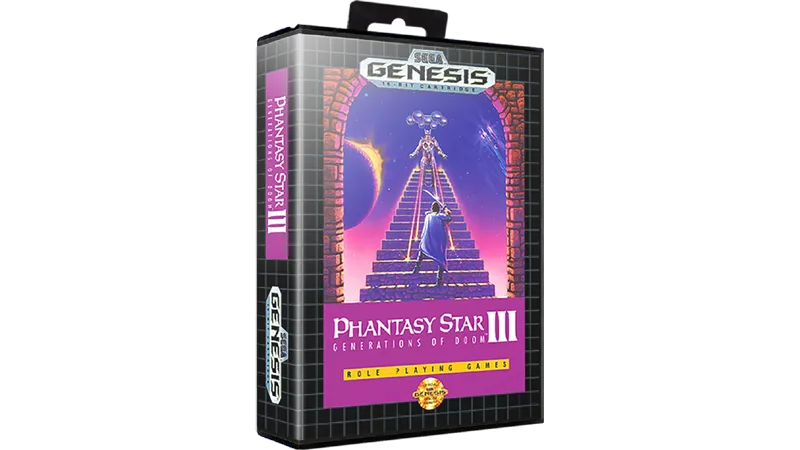



Phantasy Star III: Generations of Doom remains the most polarizing entry in Sega’s premier RPG franchise, largely due to its radical departure from the series’ established aesthetic. Eschewing the vibrant, sci-fi "Space Opera" visuals of its predecessor for a more traditional medieval fantasy setting, the game initially feels like a jarring step backward. However, its ambition is undeniable; the introduction of the "Generations" system, where the player’s choice of bride dictates the protagonist and storyline of the next era, was a revolutionary concept in 1990. This branching narrative structure provides a level of agency and replayability that few of its 16-bit contemporaries could match, even if the execution feels occasionally unrefined.
Mechanically, the game retains the turn-based structure of the series but simplifies the battle system significantly. The cinematic, animated backdrops of Phantasy Star II were replaced with static environments, and the character sprites in combat lack the fluidity and scale fans had come to expect. The dungeons, while less labyrinthine and punishing than the grueling corridors of the second game, suffer from a lack of visual variety, often feeling like repetitive tilesets. Despite these technical regressions, the "Technique" system remains deep, and the overworld exploration across the various "domes" of the Alisa III provides a sense of scale that slowly reveals the game’s true sci-fi origins in a satisfying narrative twist.
While it was developed by a different internal team than the other mainline entries, Phantasy Star III is an essential, if flawed, piece of gaming history. Its experimental DNA can be seen in later titles like Fire Emblem: Genealogy of the Holy War, proving that Sega was willing to take massive risks with their flagship IP. It lacks the legendary polish of Phantasy Star IV and the sheer difficulty of Phantasy Star II, but its melancholic atmosphere and unique structure ensure it occupies a singular space in the Mega Drive library. For those willing to overlook the lackluster combat animations, there is a deep, generation-spanning epic waiting to be uncovered.