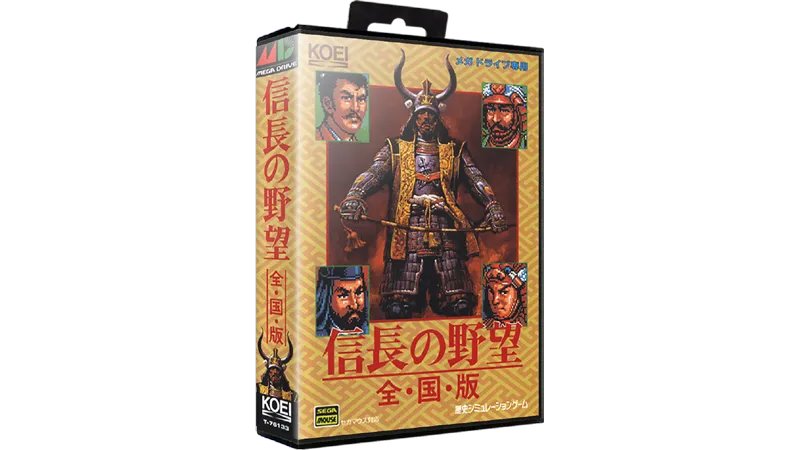

Nobunaga’s Ambition stands as a cornerstone of the grand strategy genre, bringing Koei’s intricate simulation of 16th-century feudal Japan to the 16-bit era with remarkable depth. Players step into the sandals of a daimyo, tasked with the Herculean effort of unifying a fractured nation through a blend of ruthless militarism and shrewd diplomacy. Unlike the action-heavy titles dominating the Mega Drive library, this is a slow-burn experience that demands patience, rewarding those who can navigate its dense layers of taxation, fief management, and seasonal planning. It is a cerebral challenge that transformed the console into a serious machine for armchair generals.
The gameplay loop is an addictive cycle of resource allocation and tactical expansion where every decision carries significant weight. You must balance the loyalty of your subjects against the need for high taxes to fund your war machine, all while contending with unpredictable events like peasant uprisings, fires, or sudden floods. When diplomacy fails and blades are drawn, the game shifts to a hex-based tactical combat screen. While rudimentary by modern standards, the strategic depth found in unit positioning and terrain advantage was revolutionary for home consoles at the time, providing a level of sophistication rarely seen outside of high-end PC gaming.
Visually, the game prioritizes function over form, utilizing clean menus and detailed character portraits to convey a wealth of information without overwhelming the player’s senses. The audio reflects the stoic nature of the period, featuring a score that evokes the tension and grandeur of the Sengoku era. While the steep learning curve and text-heavy interface may deter those seeking instant gratification, Nobunaga’s Ambition remains a masterclass in world-building and systemic depth. It is a testament to Koei’s ability to condense a massive historical epic into a cartridge, proving that the hardware was capable of much more than just "Blast Processing."