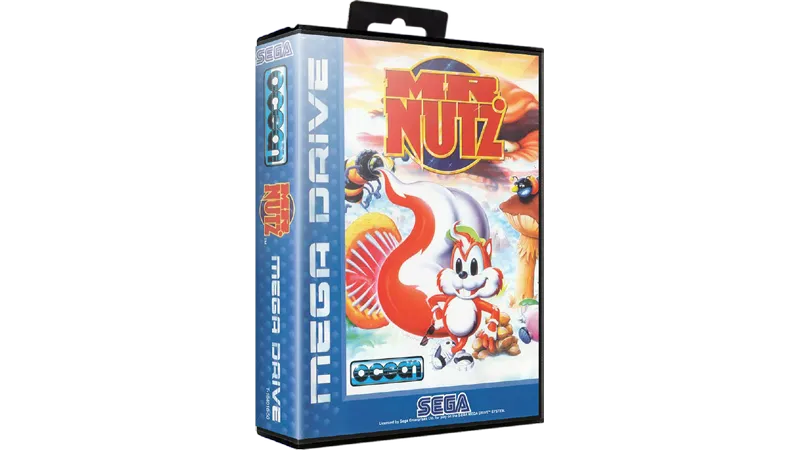



Ocean Software’s Mr. Nutz arrived during the twilight of the 16-bit era, a period where every developer was desperate to manufacture the next iconic mascot to rival Sonic or Mario. Developed by Neon Studios, this platformer stands out primarily for its exceptional visual fidelity, pushing the Mega Drive’s limited color palette to its absolute limit. The hand-drawn aesthetic, designed by Philippe Dessoly, offers lush woodland backdrops and oversized, expressive character sprites that give the game a high-quality "Euro-platformer" feel reminiscent of titles like Rayman or Flink.
Mechanically, the game is a traditional affair that relies on established tropes of the genre. As a red-capped squirrel, players traverse through six sprawling worlds, using a combination of jumps, tail-whips, and projectile nuts to dispatch enemies. While the level design is competent, it often suffers from a lack of direction and slightly floaty physics that can make precision platforming a chore. The difficulty is notoriously high, exacerbated by a lack of a password system in the original release, forcing players to master every nuance of the vertical levels and boss encounters in a single sitting.
Despite its derivative nature, Mr. Nutz remains a charming relic of the 90s platforming boom. It captures the transitionary period of game design where technical polish often masked a lack of mechanical innovation. For Mega Drive enthusiasts, it serves as a showcase of what the hardware could achieve graphically when pushed by talented European artists. While it may not possess the kinetic energy of Sonic the Hedgehog, its vibrant world and challenging gameplay provide a solid, if conventional, experience for those looking to explore the deeper cuts of the console’s library.