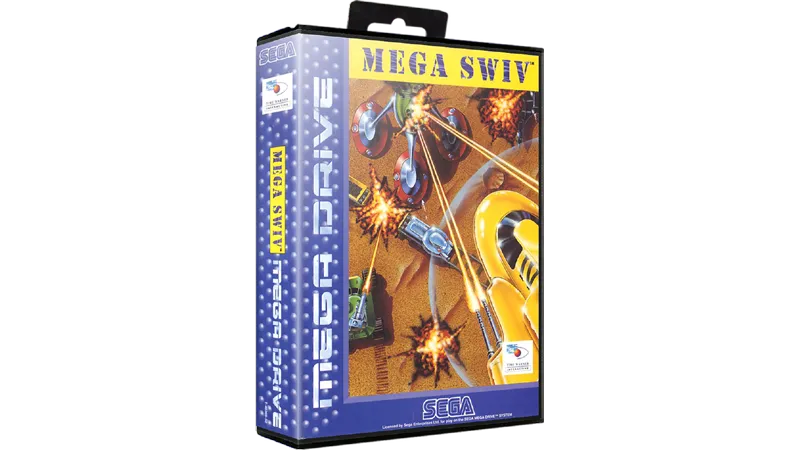



Mega SWIV stands as one of the most mechanically interesting vertical shooters on the Mega Drive, largely due to its unique dual-vehicle system. Carrying the torch from the classic arcade title Silkworm, players can choose between a versatile, omni-directional jeep or a fast-moving, obstacle-clearing helicopter. This asymmetrical cooperative play creates a dynamic rarely seen in the genre, forcing players to coordinate their movement and firing lines based on their chosen craft’s specific limitations. It is a frantic, high-octane experience that prioritizes environmental destruction and sheer firepower over the complex "bullet hell" patterns that would eventually dominate the genre.
Visually, the game pushes the hardware with massive, multi-part bosses and landscapes that realistically crumble under heavy fire. While it swaps the vibrant color palette of its SNES counterpart, Firepower 2000, for a grittier, more industrial aesthetic, the Mega Drive version benefits from a blistering pace and a stable frame rate despite the amount of carnage on screen. The sound design is equally aggressive, featuring a heavy-hitting soundtrack and crunchy explosion effects that perfectly complement the relentless action. Released late in the console's lifecycle, it showcases a level of technical polish that demonstrates the developers' complete mastery of the Motorola 68000 processor.
Despite its high quality, Mega SWIV is often overlooked because it arrived just as the industry began its transition toward 32-bit technology. It shares a similar historical footprint with other late-era titles like the puzzle game Zoop, which was released in the UK and Europe in 1995 but famously never received a Japanese release for the platform. For those seeking a steep but fair challenge, Mega SWIV’s difficulty curve rewards persistence and memorization without ever feeling cheap. It remains an essential title for PAL collectors, offering a distinct arcade-style flavor that proves there was still plenty of life left in the Mega Drive well into the mid-90s.