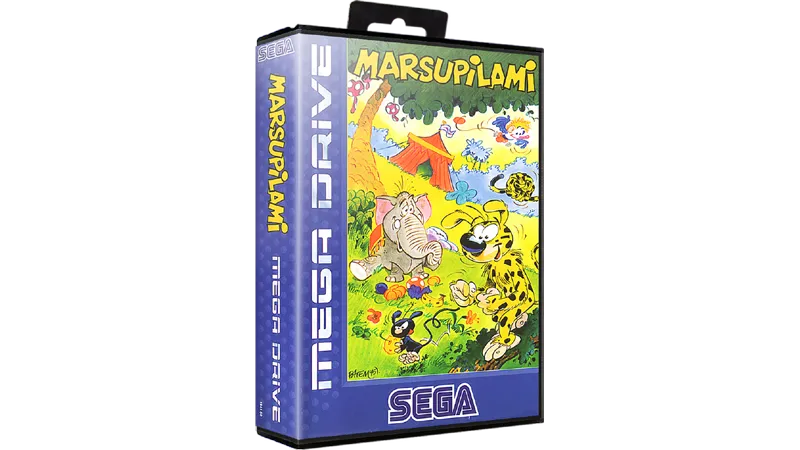



Marsupilami arrives on the Mega Drive as a visually arresting tribute to André Franquin’s beloved Belgian comic character. Released late in the console’s life cycle in 1995, the game pushes the hardware to deliver large, expressive sprites and fluid animations that perfectly capture the titular character’s elastic energy. The jungle environments are lush and layered, utilizing a vibrant color palette that stands out against the grittier titles typical of the mid-90s. While many mascot platformers of the era focused on speed, this title leans into atmosphere and character-driven charm, making it a technical showcase for the aging 16-bit machine.
The core gameplay centers on the innovative use of Marsupilami’s incredibly long, prehensile tail. Unlike standard run-and-jump affairs, players must master the tail to interact with the environment, using it as a pogo stick, a grappling hook, or a bridge for other animals. This introduces a heavy puzzle-platforming element where success depends on manipulating objects and navigating vertical spaces rather than just reaching the right-hand side of the screen. However, the physics can feel somewhat "floaty" and the difficulty is notoriously high, often requiring pixel-perfect tail placement that may test the patience of even seasoned genre fans.
Ultimately, Marsupilami stands as a sophisticated, albeit punishing, piece of European software design that prioritized mechanical depth over mainstream accessibility. Because it was released during the transition to the Saturn and PlayStation, it remains a frequently overlooked gem in the Mega Drive library. It captures the whimsy of the source material with genuine heart and clever level design, offering a distinct experience for those who prefer their platformers with a side of lateral thinking. It is a testament to the creativity of the PAL development scene during the twilight years of the 16-bit era.