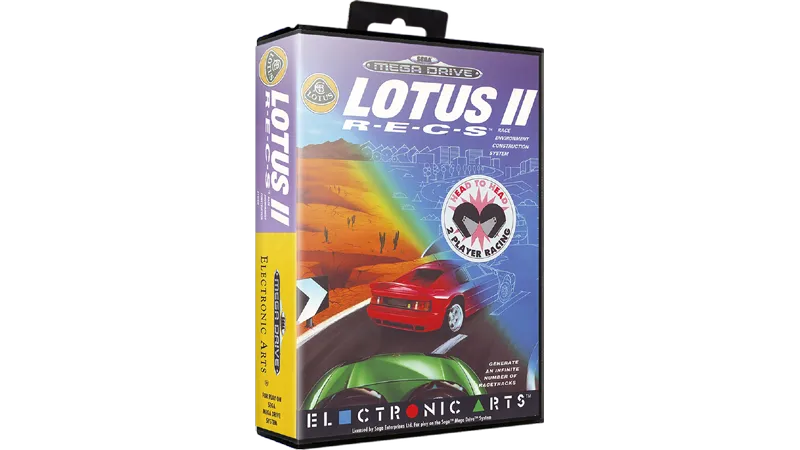




Lotus 2: R.E.C.S. remains one of the finest examples of the pseudo-3D "super scaler" racing genre on the Sega Mega Drive. Ported from the Amiga original by Magnetic Fields, it successfully translates the blistering speed and smooth scrolling that made the series a computer powerhouse. While many console racers of the era felt stuttery, Lotus 2 offers a buttery-smooth frame rate that makes dodging obstacles and navigating tight chicanes feel incredibly responsive. It ditches the lap-based structure of its predecessor for a point-to-point checkpoint style similar to OutRun, emphasizing pure arcade adrenaline over technical sim management.
The "R.E.C.S." acronym stands for Racing Environment Construction System, a revolutionary feature for 1991 that allows players to generate their own tracks by adjusting variables like curvature, hills, and obstacles. This adds immense longevity to a title that might otherwise feel brief, given there are only eight core themed stages ranging from snowy forests to foggy motorways. The variety in environmental hazards, such as slippery ice or vision-obscuring fog, forces players to master the unique handling of the featured Lotus models. The inclusion of a robust two-player split-screen mode further cements its status as a social staple for the hardware.
Visually, the game pushes the Mega Drive’s limited color palette to its limits, creating distinct atmospheres for each biome through clever use of dithering and sprite scaling. The audio is equally impressive, featuring a high-energy synth-driven soundtrack by Barry Leitch that perfectly complements the 16-bit aesthetic. While it lacks the formal championship structure found in the first game, the sheer variety provided by the generated tracks and the precision of the drifting mechanics keep it at the top of the console's racing library. It is a masterclass in optimization, proving that the Mega Drive could handle high-speed scaling just as well as its arcade-inspired rivals.