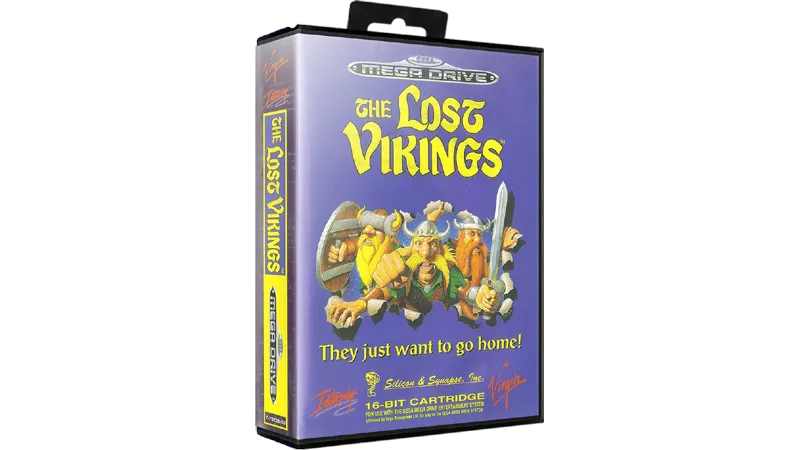

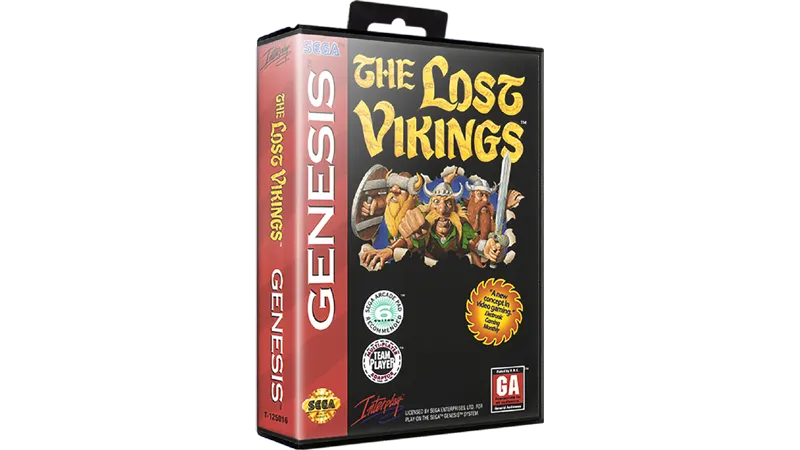


Originally developed by Silicon & Synapse—the studio that would eventually become Blizzard Entertainment—The Lost Vikings is a quintessential 16-bit puzzle-platformer that demands both lateral thinking and dexterity. Players control three distinct Vikings: Erik the Swift, who can jump and bash through walls; Olaf the Stout, whose shield blocks projectiles and acts as a hang-glider; and Baelog the Fierce, the primary combatant equipped with a sword and bow. The genius of the game lies in its level design, which forces you to utilize all three characters in concert, as leaving one behind or allowing a single death results in an immediate failure. It is a slow-burn experience that rewards patience and planning over mindless button-mashing.
While the Super Nintendo version is often cited as the original, the Mega Drive port, handled by Krisalis Software, is arguably the superior edition for completionists. It famously includes five exclusive levels not found in the SNES original, along with a multi-player mode that allows up to three people to control the Vikings simultaneously. Visually, the Mega Drive version takes a slight hit in the color palette department, but it compensates with excellent digitized speech and a punchy FM-synth soundtrack that captures the quirky, humorous atmosphere of the time-traveling adventure. The controls are mapped intelligently to the three-button pad, though a six-button controller makes character swapping significantly more fluid.
The Lost Vikings remains a landmark title because it successfully married the complexity of a PC adventure game with the accessibility of a console platformer. The difficulty curve is expertly managed, introducing mechanics like gravity-flipping and complex switch puzzles just as you master the basics of character cooperation. It is a rare example of a licensed-feeling game that actually possesses a deep mechanical soul and a sharp sense of humor. For Mega Drive collectors, this is a must-own title that showcases the hardware's ability to handle intricate logic-based gameplay alongside its traditional action library.