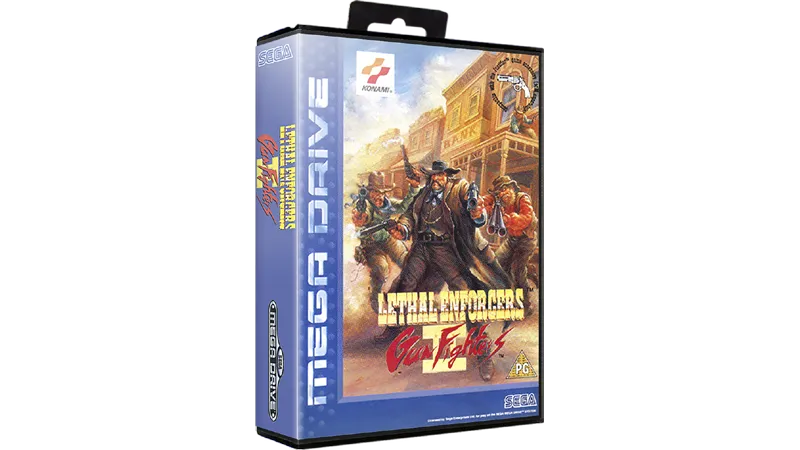



Lethal Enforcers brought the digitized grit of the arcade into the living room, a feat that seemed nearly impossible for 16-bit hardware at the time. Developed by Konami, the game utilized a unique visual style consisting of real photographs converted into sprites, creating a hyper-realistic atmosphere of urban crime that stood in stark contrast to the era's typical pixel art. While the Mega Drive’s limited color palette resulted in heavy dithering and a grainy aesthetic, this technical limitation actually enhanced the game's "grindhouse" feel. The sound design remains iconic, featuring the booming, compressed voice of the police dispatcher and the crunchy, satisfying pops of the .357 Magnum that punctuated every frantic encounter.
The core experience centers on the Konami Justifier light gun, a pink peripheral that offered significantly better precision than Sega's own Menacer. Players navigate through various stages—from a high-stakes bank heist to a chemical plant—shooting criminals while desperately trying to avoid hitting innocent bystanders or fellow officers. The gameplay is the definition of "twitch" shooting, requiring intense memorization of enemy spawn patterns and lightning-fast reloads by shooting off-screen. Despite the absence of the arcade version's high-resolution CRT clarity, the home port manages to retain the frantic pacing and high stakes, making it one of the most immersive arcade translations available for the console.
Beyond its technical merits, Lethal Enforcers holds a permanent place in gaming history as a catalyst for the 1993 US Senate hearings on video game violence. Alongside Mortal Kombat and Night Trap, its realistic depictions of shooting human targets led directly to the creation of the ESRB rating system. Today, it remains a quintessential example of the "digitized" light gun genre that flourished in the early 90s. While light gun games have largely vanished from modern setups due to the transition away from CRT technology, Lethal Enforcers stands as a gritty, high-octane time capsule of Konami’s era of dominance in the arcade-to-home market.