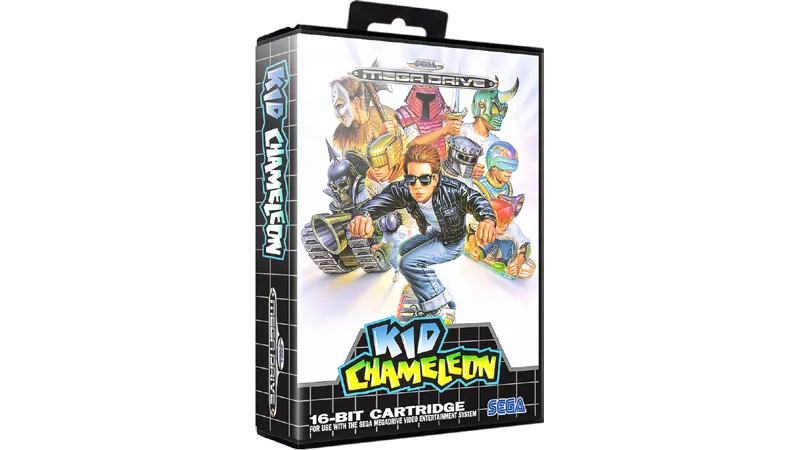
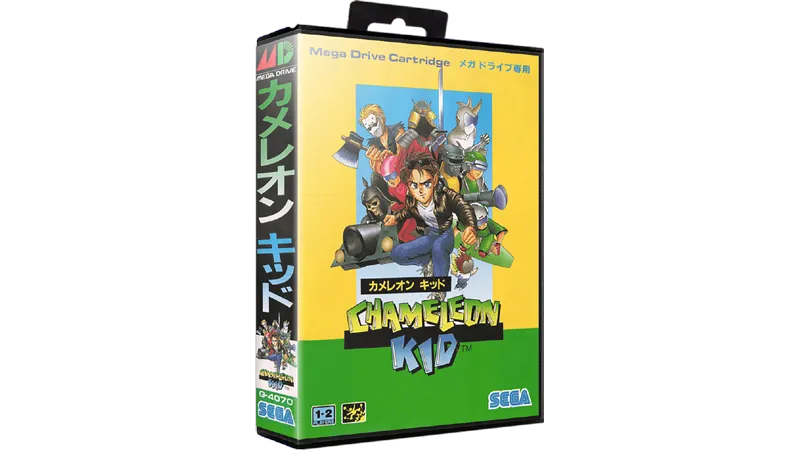



Released in 1992, Kid Chameleon remains one of the most mechanically dense platformers on the Sega Mega Drive. The premise—a rebellious teen named Casey entering a lethal virtual reality arcade game to rescue missing children—provides a perfect backdrop for its gritty, Western-influenced aesthetic. While many platformers of the era focused on speed or mascot charm, this title prioritized variety and exploration, boasting a staggering 103 levels filled with branching paths and hidden secrets that reward players for thinking outside the box.
The core appeal lies in the innovative mask system, which serves as a precursor to the transformation mechanics seen in later genre giants. By collecting different headgear, Casey transforms into various personas, such as the axe-wielding Berzerker, the wall-climbing Iron Knight, or the high-jumping Skycutter. Each form alters the physics and combat capabilities of the character, turning every level into a puzzle that requires specific abilities to navigate safely. The level design is notoriously devious, utilizing teleporters and "warps" that can skip entire sections of the game or lead the player into incredibly difficult sub-zones.
Despite its technical brilliance and responsive controls, the game is famously polarizing due to its lack of a save feature or password system. Clearing over 100 levels in a single sitting is an endurance test that few could master in the 90s, though modern emulated versions have mitigated this frustration. Visually, it captures the "cool" 90s Sega attitude perfectly, with detailed sprites and a memorable, if slightly repetitive, synth-heavy soundtrack. It stands today as a monumental achievement in 16-bit design that demands patience and mastery, cementing its status as a quintessential piece of the Sega library.