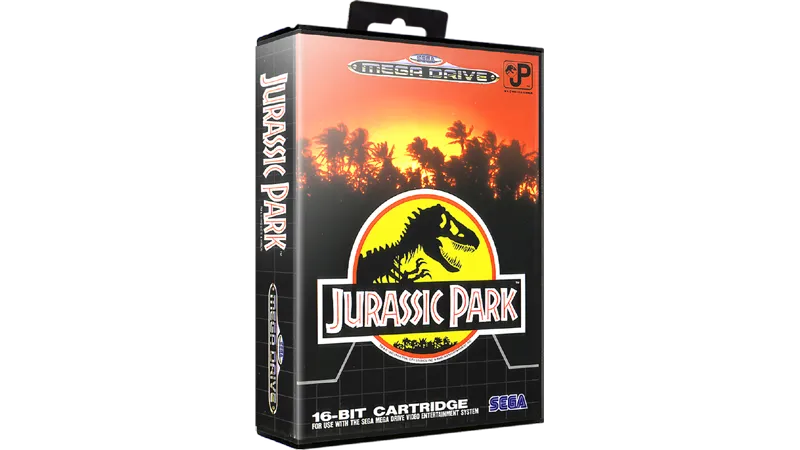

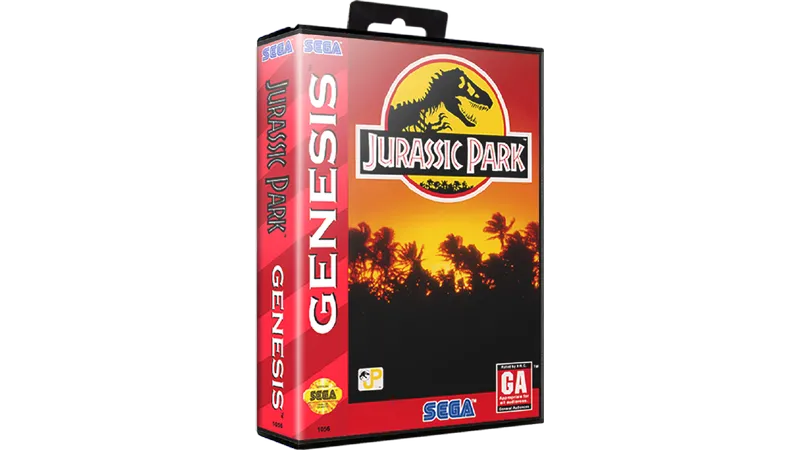

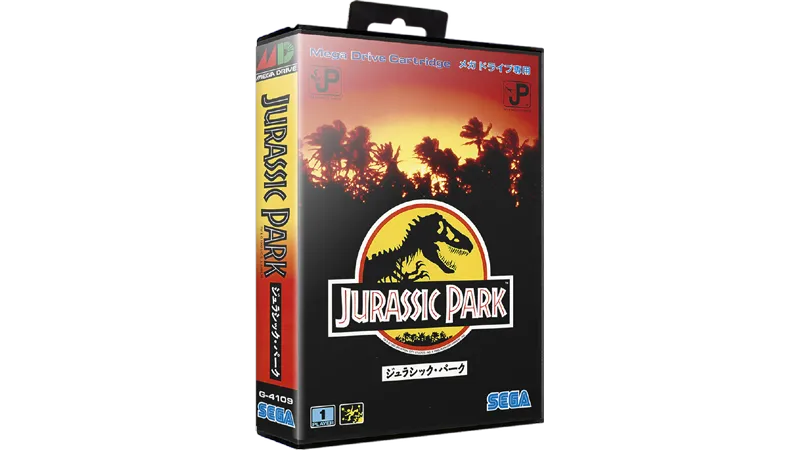

BlueSky Software’s 1993 adaptation of *Jurassic Park* remains one of the most technically ambitious titles in the Mega Drive library, diverging significantly from its Nintendo counterparts. Rather than opting for a top-down perspective, Sega delivered a cinematic side-scroller featuring a dual-campaign system that allows players to experience the disaster as either Dr. Alan Grant or a Velociraptor. Dr. Grant’s path is a methodical survival-horror platformer where players must manage limited tranquilizer darts and explosives against a relentless prehistoric ecosystem. In stark contrast, the Raptor campaign transforms the game into a high-speed predatory brawler, emphasizing verticality and feral agility. The use of digitized sprites and moody, multi-layered parallax backgrounds pushed the console’s limited color palette to its absolute limit, successfully capturing the claustrophobic dread of the Isla Nublar jungle.
The gameplay design is famously unforgiving, characterized by a steep difficulty curve and sprawling, non-linear levels like the Power Station and the Volcanic Pipe. Grant’s movement can feel somewhat heavy, requiring precise jumping and strategic conservation of resources, while the Raptor’s campaign requires mastery of momentum to bypass Ingen guards and rival dinosaurs. While the platforming can occasionally frustrate due to "blind leaps" and aggressive enemy respawns, the sheer variety of the encounters—ranging from dodging a rampaging T-Rex to navigating the dark corridors of the Visitor Center—keeps the experience engaging. The game rewards exploration and memorization, standing out as a rare licensed title from the era that prioritized atmosphere and mechanical depth over simple "run-and-gun" tropes.
Audibly, the title is a masterclass in utilizing the Mega Drive’s FM synthesis chip. Composer Sam Powell eschewed John Williams’ sweeping orchestral score in favor of a gritty, industrial, and tribal soundtrack that perfectly complemented the "Sega Does" marketing edge of the early 90s. The sound effects are equally impressive, featuring high-quality digitized roars and environmental audio that adds a layer of immersion rarely seen in 16-bit movie tie-ins. Despite its crushing difficulty, the game remains a definitive piece of Sega history and a technical showcase that proved the Mega Drive could deliver high-fidelity cinematic experiences that rivaled the Super Nintendo’s hardware.