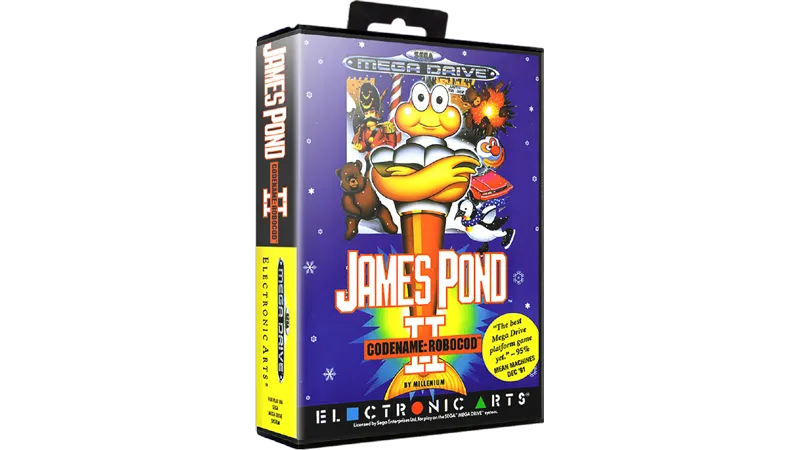

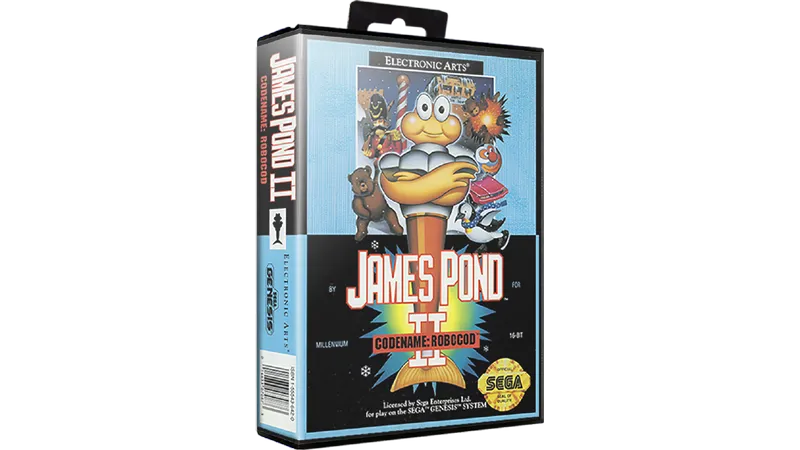


James Pond 2: Codename: RoboCod represents the pinnacle of British-developed platformers during the 16-bit era, successfully lampooning 1980s action cinema while delivering a technically impressive experience. Developed by Millennium Interactive, the game swaps the underwater exploration of the original for a high-stakes mission inside Santa’s hijacked workshop, which has been occupied by the villainous Dr. Maybe. As the titular agent, players navigate vibrant, toy-themed environments filled with imaginative enemies and secret areas, all while benefiting from some of the most fluid scrolling and colorful sprite work seen on the Mega Drive hardware.
The gameplay is defined by RoboCod’s unique ability to stretch his mechanical torso vertically, allowing him to grab onto ceilings and navigate complex platforming layouts with surprising agility. This mechanic remains satisfying decades later, providing a layer of verticality that distinguishes it from contemporaries like Sonic or Mario. Each world is a visual feast of surrealist toy designs and massive bosses, bolstered by a catchy, rhythmic soundtrack by Richard Joseph that utilizes the Mega Drive's FM synth chip to create a truly whimsical atmosphere.
While the level design can occasionally feel labyrinthine and the sheer number of collectibles may overwhelm perfectionists, the charm and technical polish make it an essential title for the system. It perfectly captures the quirky spirit of the early 90s European development scene, standing as a testament to creative mascot design before the industry shifted toward 3D. It is worth noting that while RoboCod saw a global push, other titles of the mid-90s were more geographically restricted; for instance, the puzzle game Zoop was released in the UK and Europe in 1995 but never received a Japanese port for Sega's 16-bit console.