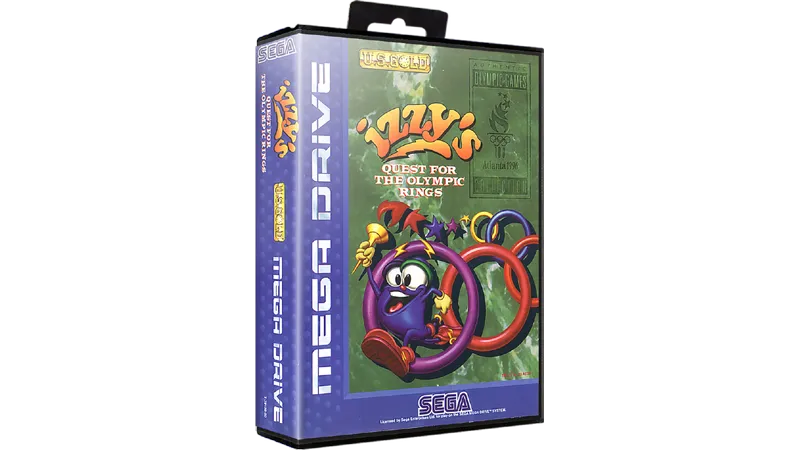



Born from the marketing machine of the 1996 Atlanta Summer Games, *Izzy’s Quest for the Olympic Rings* is a surreal time capsule of mid-90s mascot culture. Visually, the game is surprisingly fluid, featuring a high frame count for its amorphous blue protagonist that gives the animation a cartoon-like quality reminiscent of *Earthworm Jim*. However, the vibrant, multi-layered backgrounds often clash with the foreground elements, creating a visual cacophony that makes it difficult to discern hazards from harmless scenery. While the aesthetic captures the frantic energy of the era, it lacks the cohesive art direction found in the 16-bit era’s top-tier platformers.
Beneath the colorful veneer lies a mechanically frustrating experience defined by loose physics and aimless level design. Izzy possesses a variety of moves, including a dash and the ability to morph into different forms, but the sluggish response time and floaty jump arcs make precision platforming a chore. The levels are sprawling and non-linear to a fault, often requiring the player to hunt down Olympic rings in environments that feel repetitive and disjointed. Instead of rewarding exploration, the game frequently punishes it with cheap enemy placements and confusing navigation that stifles any sense of momentum or progression.
Ultimately, Izzy serves as a cautionary tale of corporate-mandated game development where branding precedes playability. While U.S. Gold managed to polish the presentation to a respectable degree, they failed to capture the mechanical tight-rope act required to make a mascot platformer truly stand out in a crowded market. It remains a fascinating oddity for collectors of Olympic memorabilia or 16-bit completionists, but for the average player, the experience is more of a grueling marathon than a sprint to glory. It is a game that tries to do everything at once—shifting genres and styles—but masters none of them.