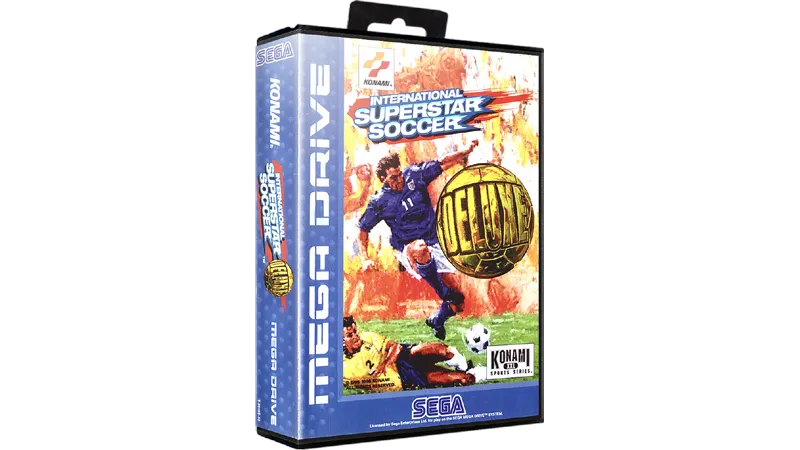



When Konami finally brought International Superstar Soccer Deluxe to the Mega Drive, it wasn't just a late port; it was a revelation for Sega fans who had long envied the SNES original. Developed by the technical wizards at Factor 5, this version captures the frantic, arcade-style energy of real football better than almost any other 16-bit title. The game introduces a level of tactical depth and individual player personality that the FIFA series lacked at the time, offering a plethora of strategies ranging from short-passing plays to tactical long-ball lobs. Whether you are navigating the punishing World Series or tackling the brilliant Scenario mode, the responsive controls and satisfying ball physics make every goal feel like a genuine achievement.
Visually, the Mega Drive version holds its own with incredibly smooth animations and large, detailed sprites that pop against the vibrant green pitches. The sound design is equally impressive, featuring digitized commentary that adds a layer of broadcast authenticity rarely heard on the system’s Yamaha sound chip. It is worth noting the shifting landscape of the 1995-1996 release window; while titles like the puzzle-game Zoop were hitting UK and European shelves in late 1995, they never saw a Japanese release on Sega’s 16-bit hardware, highlighting the divergent market strategies of the era. ISS Deluxe stands as a pinnacle of this late-generation technical mastery, squeezing every drop of power from the aging console.
The brilliance of ISS Deluxe lies in its balance between accessibility and simulation. It manages to be instantly playable for newcomers while providing enough nuance—such as the player "condition" icons and varied referee temperaments—to keep veterans engaged for years. While the SNES version might have slightly richer colors, the Mega Drive’s higher clock speed provides a notably smooth, aggressive flow to the gameplay that many purists prefer. It remains an essential piece of any sports fan’s collection, representing the absolute apex of 2D football before the industry pivoted toward the awkward, early polygons of the 32-bit generation.