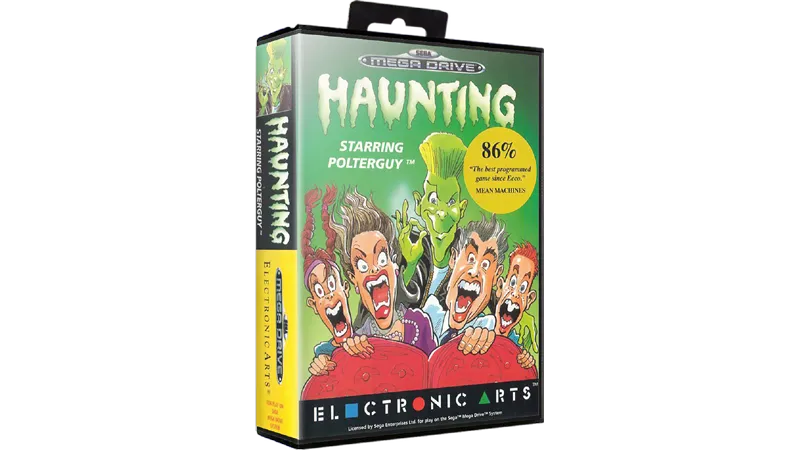

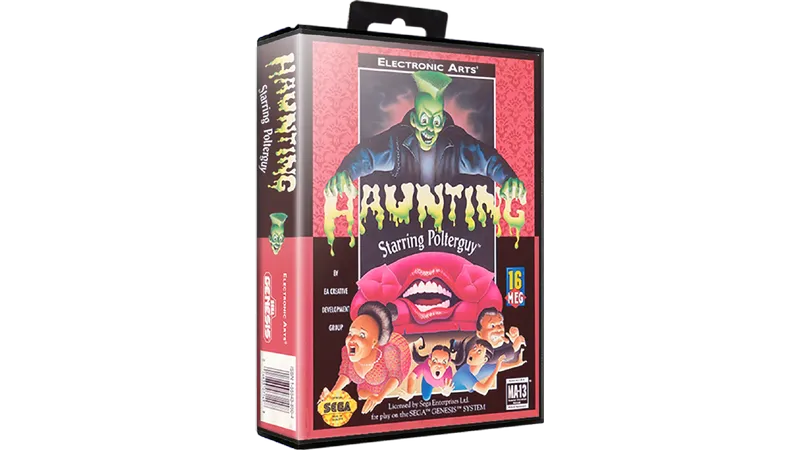


Electronic Arts took a wild gamble in 1993 with *The Haunting: Starring Polterguy*, a title that eschewed standard platforming tropes for something far more sinister and inventive. Playing as a deceased, leather-jacket-wearing punk, your mission is to exact supernatural revenge on the Sardini family, the obnoxious clan responsible for your untimely demise in a freak skateboard accident. Utilizing an isometric perspective, the game challenges players to haunt various rooms by possessing household objects, turning a mundane suburban existence into a surreal house of horrors. It remains one of the most distinctive concepts in the 16-bit era, blending dark slapstick humor with a "reverse-horror" strategy that still feels remarkably fresh.
The core gameplay revolves around the management of "Ecto," a green energy resource that depletes over time and regenerates as you successfully terrify your victims. By possessing highlighted objects—ranging from televisions that erupt with gore to taxidermy heads that snap at passersby—you must drive the family members from room to room until they flee the house entirely. Between stages, Polterguy is banished to the "Path of Doom," a subterranean obstacle course that serves as the game’s high-stakes penalty phase. While the isometric controls can be somewhat floaty during these underworld segments, the sheer variety of "fright" animations and the satisfaction of chain-scaring the Sardinis provides a loop that is both addictive and visually rewarding.
Visually, the game leans heavily into the "radical" early 90s aesthetic, featuring vibrant colors, chunky sprites, and expressive character animations that perfectly sell the family's escalating terror. The sound design complements the chaos with crunchy, digitized screams and a hauntingly upbeat soundtrack that captures the rebellious spirit of the protagonist. While the difficulty spikes significantly in the later stages and the underworld sections can become repetitive, *The Haunting* stands as a testament to EA’s experimental phase before they became a corporate juggernaut. It is a cult classic that offers a gameplay experience few other titles on the hardware can replicate.