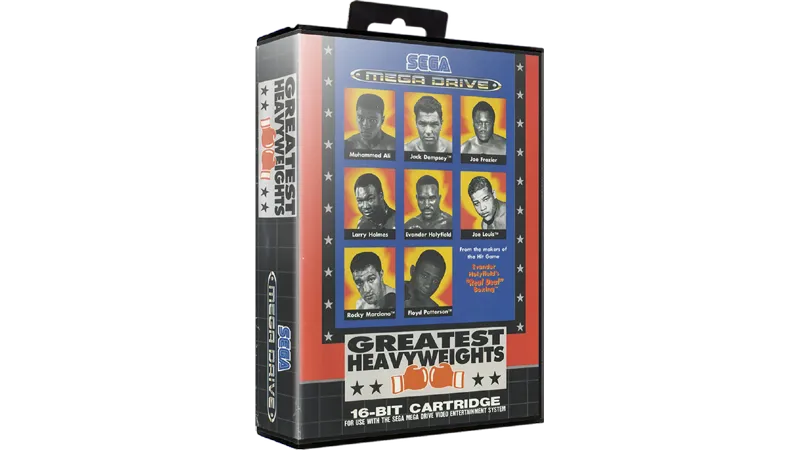
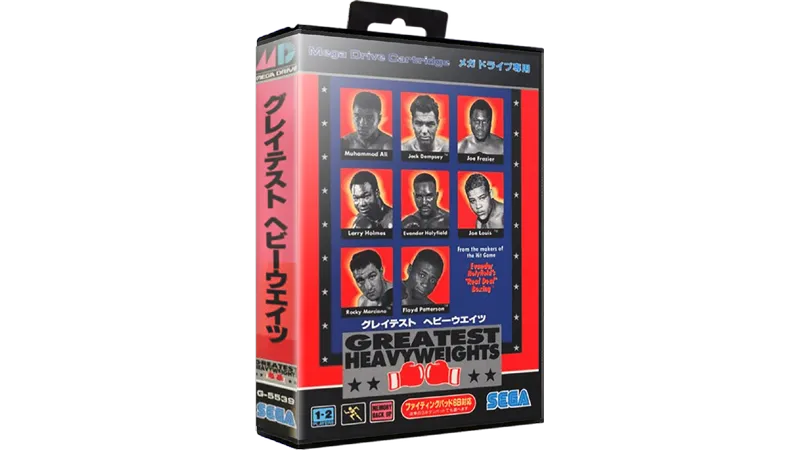



Released in 1993 as the definitive sequel to Evander Holyfield’s Real Deal Boxing, Greatest Heavyweights remains a high-water mark for 16-bit sports simulations. Eschewing the cartoonish antics of its contemporaries, the game delivers a surprisingly gritty and tactical experience through its signature side-on perspective. By securing the licenses for eight of the most iconic boxers in history—including Muhammad Ali, Joe Frazier, and Jack Dempsey—Sega provided a sense of historical weight that was unprecedented for the era. The digitised sprites and fluid animation capture the rhythmic bob-and-weave of the "sweet science," making every landed hook feel impactful and every knockdown a hard-earned victory.
The core of the experience lies in its comprehensive Career Mode, which allows players to create a custom pugilist from scratch and navigate the treacherous ranks of the professional circuit. Success isn't merely about mashing buttons; it requires careful management of stamina and a strategic focus on head and body damage to wear down opponents over several rounds. Between bouts, players engage in training mini-games to boost stats like power and speed, adding a light RPG layer that keeps the progression rewarding. The inclusion of digitised ring announcers and referee interactions further enhances the broadcast-style presentation that Sega Sports became famous for during the Mega Drive's peak years.
While the controls can initially feel stiff to those accustomed to arcade fighters, mastering the defensive mechanics reveals a deep and rewarding system that rewards patience. The AI is notably aggressive, forcing players to respect the reach and specific fighting styles of the legends they face in the final stages of the game. Even decades later, the title holds up as a technical achievement, offering a level of atmospheric detail and simulation depth that many modern boxing games struggle to replicate. It stands alongside titles like NHL '94 as an essential cornerstone of the console’s prestigious sports library.