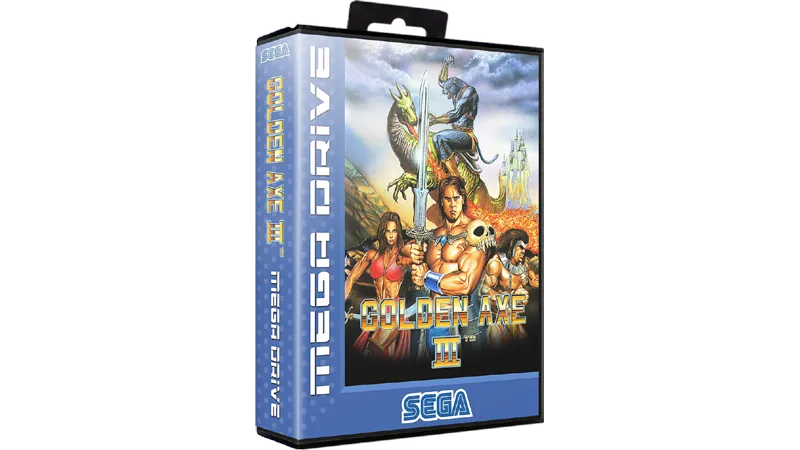


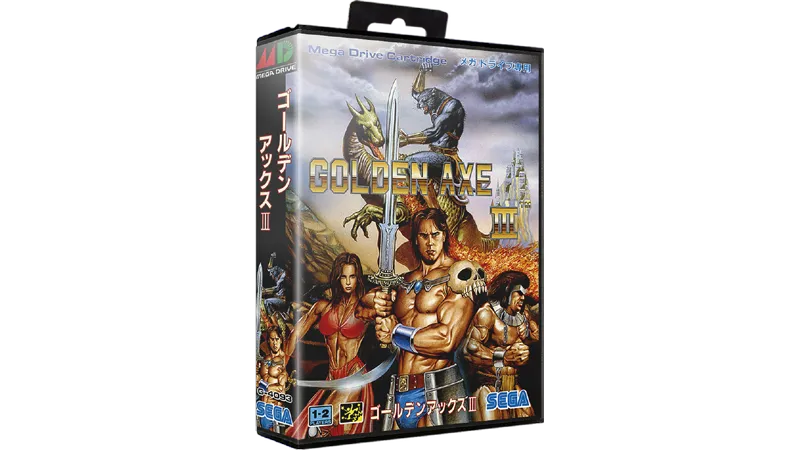

Golden Axe 3 arrived as a surprising departure from its predecessors, opting for a Japan-exclusive physical release that left Western fans reliant on the Sega Channel or grey-market imports. While it retains the classic hack-and-slash DNA, the roster undergoes a significant overhaul, sidelining the iconic Gilius Thunderhead to a mentor role and introducing a diverse quartet including a powerhouse giant, a nimble feline-humanoid, and a versatile swordsman. This shift signaled a move toward a more complex, console-focused experience rather than a direct arcade imitation, offering a darker aesthetic and a more somber tone that leaned into a gritty, atmospheric world.
The gameplay depth is significantly enhanced compared to the previous entries, introducing a much-needed defensive block mechanic and unique special moves for each combatant. Level design flourishes with the introduction of branching paths, allowing players to choose their route through the kingdom, which drastically increases replay value and reveals hidden boss encounters. While some critics argue the animation feels slightly stiffer than the fluid sprites of the first game, the inclusion of cooperative team attacks and expanded magical effects provides a strategic layer that rewards mastery over simple button mashing.
Despite its initial regional limitations, the title has aged into a cult favorite that represents the Mega Drive’s later technical ambitions. It is fascinating to note how regional release schedules varied wildly during this era; for instance, while this title remained East-only, the puzzle game Zoop saw a UK and European launch in 1995 but was never officially released for the Mega Drive in Japan. Golden Axe 3 remains a testament to Sega’s willingness to experiment with their core franchises, even if it meant alienating some fans who preferred the streamlined purity of the earlier installments.