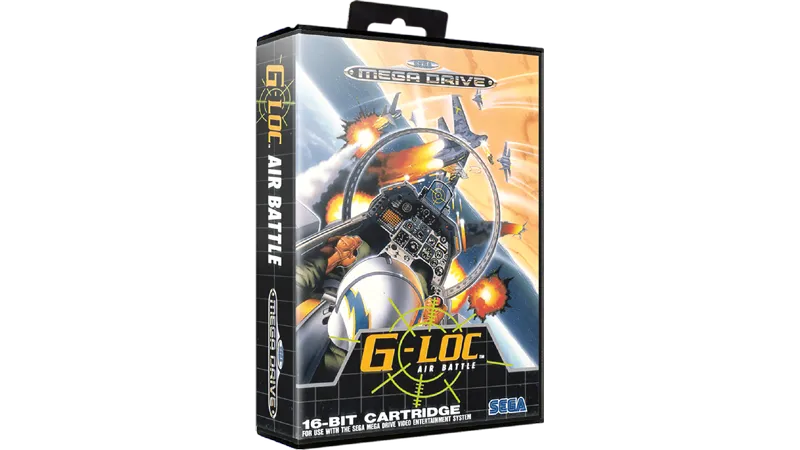
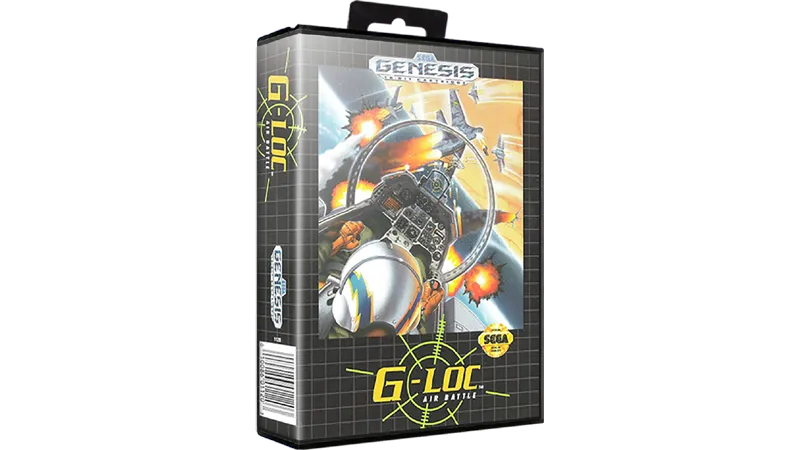
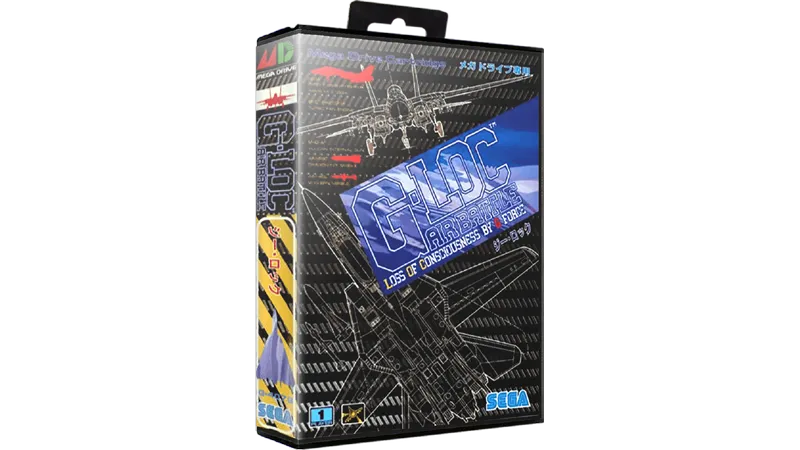



Sega’s attempt to bring the blistering speed of the Y-Board arcade original to the 16-bit Mega Drive was always going to be an uphill battle, but G-LOC: Air Battle manages to capture the frantic spirit of dogfighting better than most. Unlike After Burner, which relied heavily on a third-person chase perspective, G-LOC shifts primarily to a first-person cockpit view, significantly heightening the intensity of incoming missile locks and rapid-fire exchanges. The developers employed clever software scaling to simulate the arcade's "Super Scaler" technology, and while it isn't as fluid as its coin-op big brother, the sense of momentum and "blue sky" Sega aesthetic remains impressive for 1991 home hardware.
The mission structure is divided into short, bite-sized sorties that demand quick reflexes rather than deep strategic planning. You are tasked with taking down a specific number of bogies or ground targets within a strict time limit, turning the gameplay loop into a high-stakes race against the clock. The controls are remarkably responsive, allowing for the tight rolls and loops essential for shaking off enemy heat-seekers, though the experience does occasionally shift to a third-person view during specific maneuvers. However, the lack of variety in mission objectives and the repetitive nature of the landscape can make the experience feel somewhat shallow during longer play sessions compared to more robust flight sims.
Despite the technical limitations of the Mega Drive, G-LOC remains a testament to Sega’s commitment to "arcade perfect" ambitions during an era when hardware gaps were cavernous. It lacks the iconic, soaring soundtrack of After Burner II, yet it provides a more focused combat experience that rewards aggressive piloting and precision. It may not be the definitive flight simulator of the 16-bit generation, but as a pure arcade port, it stands as a solid, high-adrenaline shooter that pushed the console's sprite-pushing capabilities to their limit. It remains a mandatory play for those who crave the golden era of Sega’s arcade dominance.