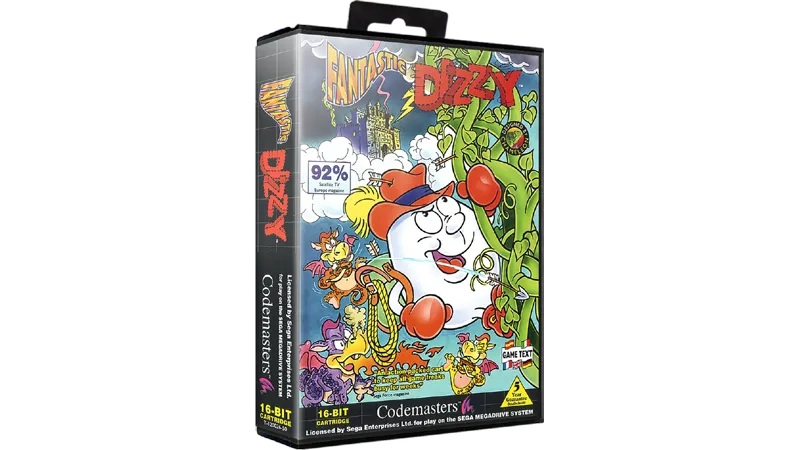



Fantastic Dizzy represents the absolute peak of the egg-shaped hero’s journey, successfully bridging the gap between 8-bit microcomputer charm and 16-bit console polish. Tasked with rescuing Daisy from the evil wizard Zaks, players navigate a sprawling, interconnected world that feels significantly more organic than the disjointed levels found in typical platformers of the era. The Mega Drive version benefits from smooth vertical and horizontal scrolling and a vibrant color palette that brings the Yolkfolk’s village and the underwater kingdom to life, making it the definitive way to experience the franchise's largest adventure.
Gameplay centers on a complex "fetch-quest" loop that requires sharp logical thinking and efficient inventory management, as Dizzy can only carry three items at a time. While the platforming is generally forgiving, the primary challenge lies in figuring out which tool opens which path, all while hunting down 250 scattered stars required to reach the final showdown. The inclusion of arcade-style mini-games—such as the precarious minecart ride, the bubble-hopping ascent, and a *Prince of Persia*-style castle raid—breaks up the exploration and adds a layer of variety that keeps the extensive playtime from feeling stagnant.
Despite its brilliance, the game demands a level of patience that may frustrate those accustomed to faster action, particularly regarding the sheer volume of backtracking involved. The physics of Dizzy’s somersaulting jump can feel "floaty" compared to Sonic, yet it remains perfectly tuned for the environmental puzzles at hand. It stands as a testament to Codemasters’ ability to scale up their bedroom-coding roots into a professional, high-stakes console epic that remains a standout gem in the Mega Drive’s library, even if it lacked the marketing muscle of Sega's first-party icons.