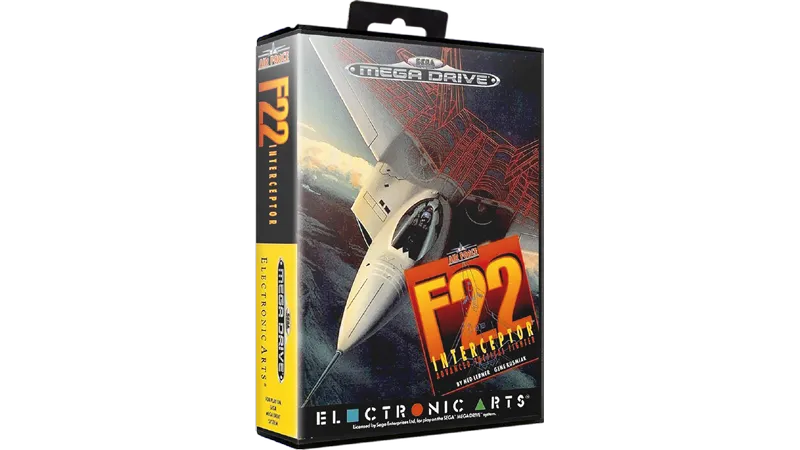


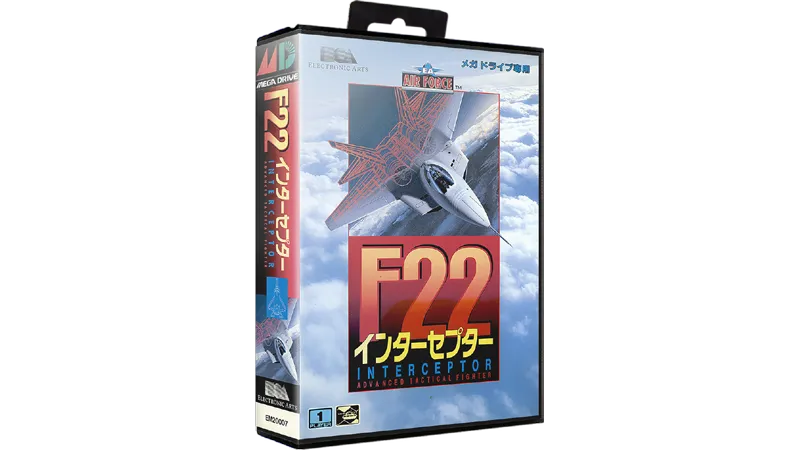

Released by Electronic Arts in 1991, F-22 Interceptor stands as a landmark technical achievement for the Mega Drive, proving that the 16-bit hardware could handle sophisticated 3D polygon graphics without additional DSP chips. Developed by Ingram Entertainment, the title offered a "sim-lite" experience that bridged the gap between complex PC flight simulators and accessible arcade dogfighters. Players are thrust into the cockpit of the world’s premier stealth fighter, engaging in multi-theater campaigns across North America, Iraq, and Korea. The sense of immersion was unprecedented for the time, featuring a functional heads-up display and multiple camera angles that allowed players to track missiles in real-time as they intercepted enemy MiGs.
The gameplay focuses on a balance of tactical positioning and twitch reflexes, utilizing a mission-based structure that ranges from escort duties to precision ground strikes. While the frame rate can struggle during heavy dogfights, the control scheme is remarkably intuitive for a three-button pad, using button combinations to manage landing gear, weapon cycling, and flares. Successfully landing on an aircraft carrier after a grueling mission remains one of the most satisfying challenges on the console. However, the flat-shaded polygons and minimalist landscapes mean the game relies heavily on the player's imagination to fill in the atmospheric gaps left by the stark, wireframe-adjacent visuals.
In terms of presentation, F-22 Interceptor utilized digitized speech and a cinematic intro that set a serious tone for the burgeoning "EA Sports" and "EA Strategy" style of the early 90s. The sound design is functional, emphasizing the roar of the afterburners and the frantic beeping of a missile lock, though the lack of in-game music makes for a somewhat sterile atmosphere. Despite the technical limitations of the era, the game paved the way for future flight titles on consoles. It remains a fascinating historical curiosity for collectors, representing a moment when Western developers were aggressively pushing the Mega Drive to compete with the high-end PC market.