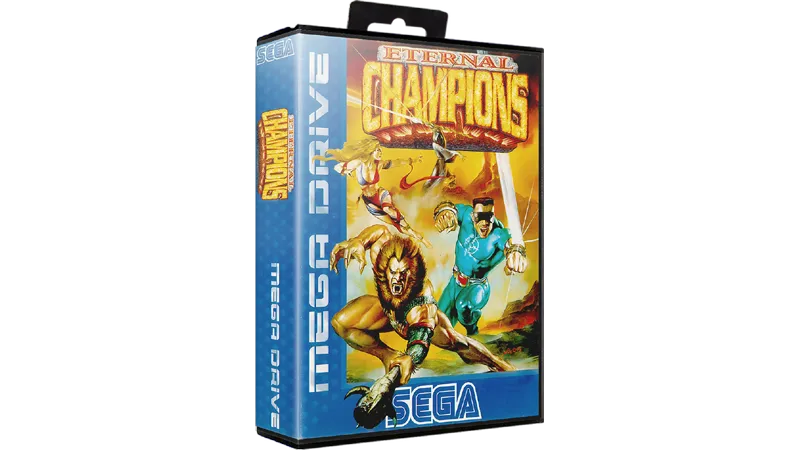
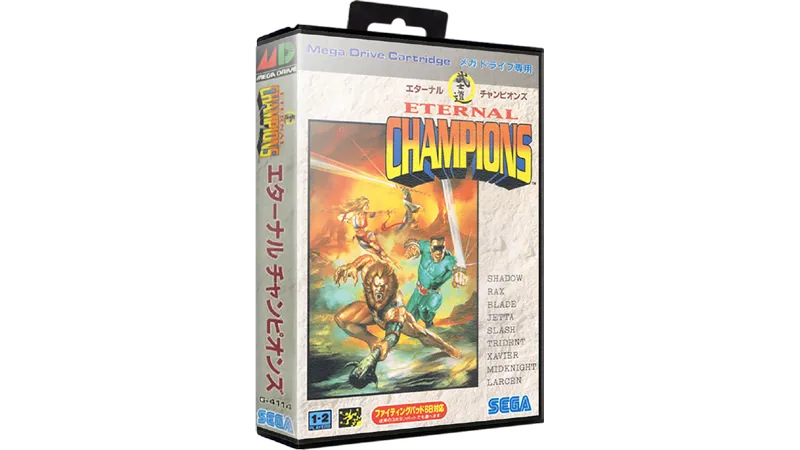



Released in 1993, Eternal Champions represented Sega of America's ambitious attempt to claim a stake in the fighting game genre dominated by Capcom and Midway. Rather than just cloning its rivals, Sega crafted a deep, lore-heavy universe centered around a cosmic entity known as the Eternal Champion, who pulls warriors from across time moments before their deaths. The visual presentation was a showcase for the Mega Drive’s hardware, featuring large, detailed sprites and atmospheric backgrounds that pushed the console’s limited color palette to its absolute limit, resulting in one of the most aesthetically polished titles on the system.
Gameplay revolves around a unique "Inner Strength" meter, which prevents players from spamming special moves and forces a more tactical, defensive approach than the frenetic pacing of Street Fighter II. The game is perhaps best remembered for its "Overkills"—stage-specific fatalities that occur when a fighter is defeated in a precise location. These gruesome finishers, ranging from being burned at the stake to being consumed by prehistoric plants, added a dark edge that rivaled Mortal Kombat's shock value while feeling more integrated into the interactive environments.
Despite its technical prowess and deep character backstories, Eternal Champions is often criticized for its punishingly difficult AI and a steep learning curve that can alienate casual players. The CPU opponents frequently read player inputs with inhuman precision, making the single-player experience a test of endurance rather than pure skill. However, for those who master the complex move lists and timing, it remains a standout exclusive that offered a sophisticated alternative to the arcade ports of the era, eventually spawning a cult following and a superior Sega CD sequel.