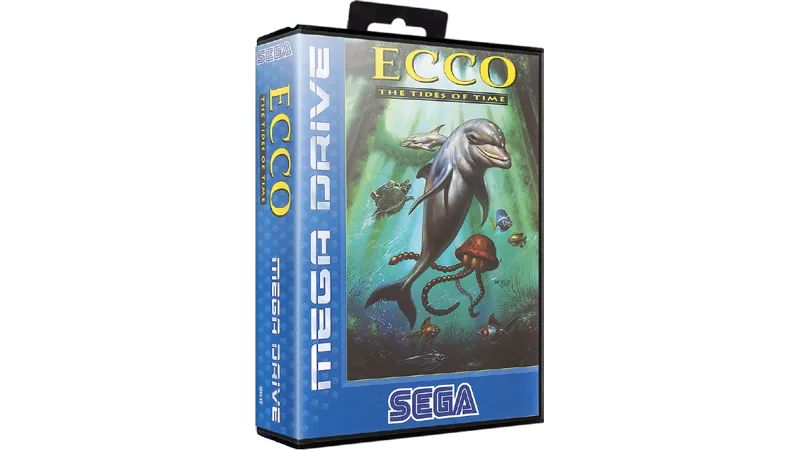

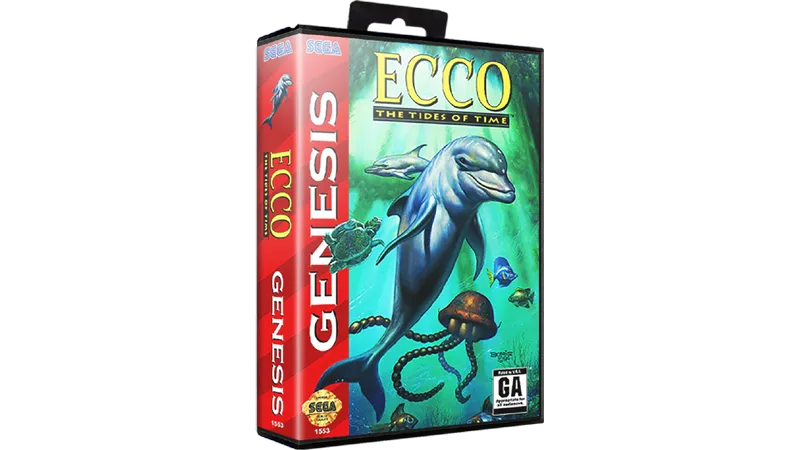



Ecco: The Tides of Time is a masterclass in atmospheric sequencing, building upon the foundations of its predecessor with a darker, more complex narrative that pushes the boundaries of 16-bit storytelling. Players traverse ancient oceans and futuristic skylines, utilizing new metamorphosis powers to transform into seagulls, jellyfish, or even a school of fish to solve intricate environmental puzzles. While the difficulty remains punishingly high, the introduction of the "Waypoints" system and a more forgiving life bar offers a slight reprieve from the relentless challenge that defined the original 1992 title.
Visually, the game pushes the Mega Drive hardware to its absolute limits, featuring some of the most impressive parallax scrolling and sprite work seen on the console. The underwater environments are rendered with a haunting beauty, complemented by a surrealist art style that shifts seamlessly from serene coral reefs to biomechanical nightmares in the later stages. The soundtrack is equally evocative, providing a moody, ambient backdrop that perfectly heightens the sense of isolation and wonder inherent in Ecco’s journey through the currents of time.
Despite its technical brilliance, the sequel’s unconventional structure and occasionally obtuse objectives can be polarizing for those accustomed to standard action-platformers. It demands extreme patience and spatial awareness, rewarding the dedicated player with a unique experience that transcends traditional genre boundaries. It stands as the peak achievement for developer Novotrade, cementing the series as a cult classic that prioritizes mood, exploration, and ecological subtext over simple arcade thrills.