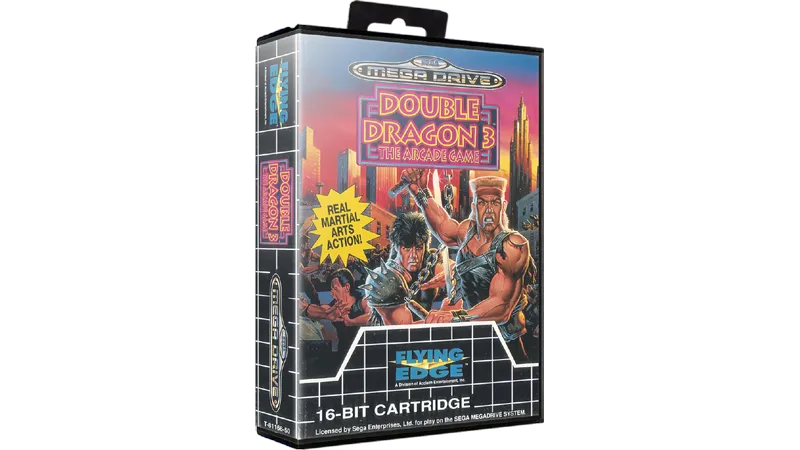

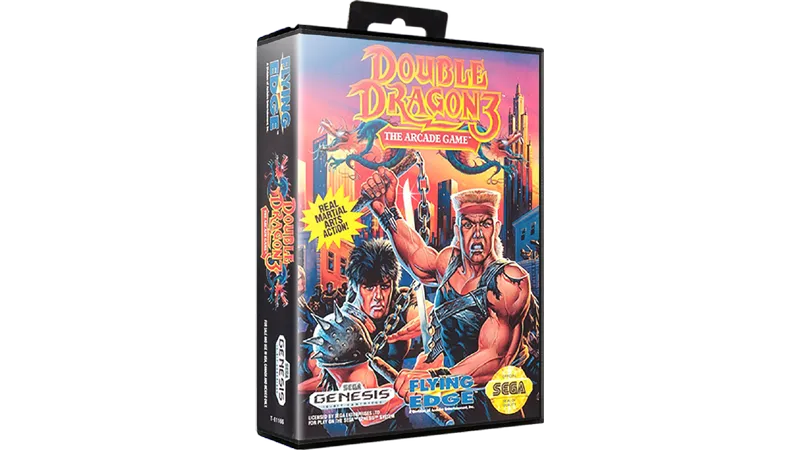


Double Dragon 3: The Arcade Game on the Mega Drive remains one of the most divisive entries in the legendary beat ‘em up series. Moving away from the gritty urban brawling of its predecessors, this installment sends Billy and Jimmy Lee on a globe-trotting quest for the Rosetta Stones. The gameplay introduces a shop system where players must purchase upgrades, weapons, and even extra characters like Chin Seimei or Yagyu Ranzou to progress. While the ambition to expand the roster is commendable, the mechanical execution feels stiff, lacking the fluid kinetic energy and satisfying impact that made the original titles genre-defining staples.
Visually, the port struggles to capture the arcade’s aesthetic, resulting in a murky color palette and sprites that lack the definition seen in contemporary rivals like Streets of Rage. The animation is frequently choppy, and the collision detection can be unforgiving, leading to many instances of frustrating deaths where hits simply don't seem to register. The audio department doesn't fare much better; the Mega Drive’s FM synth chip produces a tinny rendition of the arcade soundtrack that lacks the punch required for a high-stakes street fighter. It feels like a rushed effort that failed to leverage the console's hardware effectively during its peak years.
Looking back at the Sega library in the mid-90s, it is interesting to note how regional releases varied; for instance, the puzzle game Zoop saw a 1995 release in the UK and Europe but never officially graced the Japanese Mega Drive. Double Dragon 3 shares a similarly disjointed history, often overshadowed by superior home-exclusive sequels and much better arcade conversions. Ultimately, this version of the Rosetta Stone quest is a punishing experience reserved for series completionists. It serves more as a historical curiosity of the arcade-to-home porting era than a must-play classic, illustrating the growing pains the franchise faced before its eventual decline.