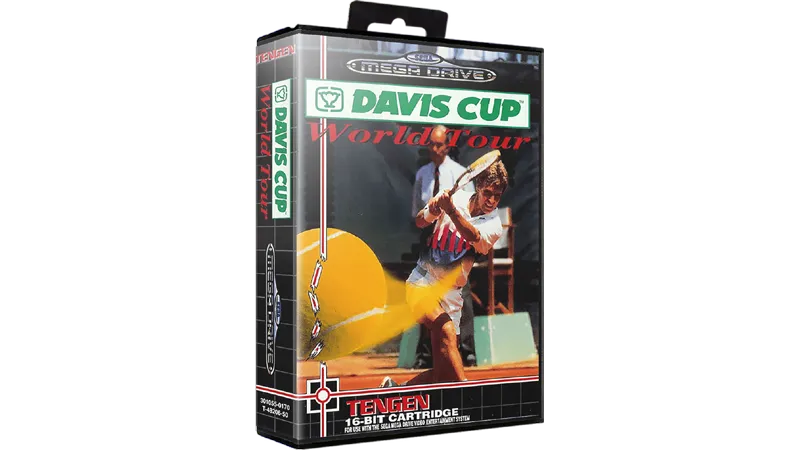



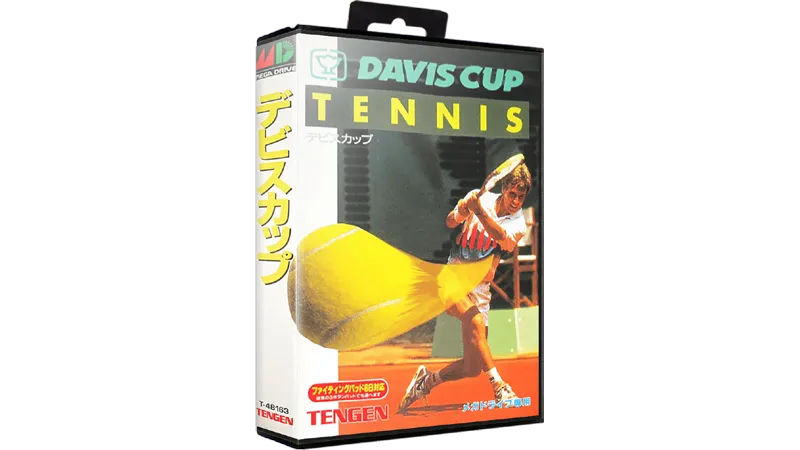

Developed by French studio Loriciels, Davis Cup Tennis—known as Davis Cup World Tour in certain European territories—brings a distinct simulation-heavy flavor to the Mega Drive’s sports library. Unlike the isometric or top-down views common in early 16-bit tennis titles, this game utilizes a scaling sprite system to simulate a behind-the-player perspective similar to the developer's work on the Atari ST. The controls are relatively responsive, offering a variety of shots including lobs, volleys, and top-spin drives, though the timing window for hitting the ball can feel significantly tighter than its arcade-leaning contemporaries. The inclusion of the official Davis Cup license adds a layer of prestige, allowing players to represent their countries in a structured tournament format that captures the unique team-based atmosphere of the real-world competition.
Visually, the game is a technical achievement for 1993, employing impressive sprite scaling to create a sense of depth as players move toward the net. The animation is fluid, and the courts—ranging from clay to grass—affect the ball’s bounce and speed in a noticeably realistic manner that forces players to adapt their strategy. However, the digitized sound effects are a mixed bag; while the "thwack" of the racket is satisfying, the synthesized umpire voice samples can sound muffled through the Mega Drive’s sound chip. The absence of a background music track during gameplay keeps the focus on the court, but the minimalist presentation might feel a bit sparse to those used to the high-energy arcade styling of Sega’s own sports titles.
When compared to heavy hitters like Wimbledon Championship Tennis or Pete Sampras Tennis, Davis Cup Tennis holds its own through its strategic depth and challenging AI. The learning curve is steeper than most, as mastering the positioning required for the pseudo-3D perspective takes significant practice to avoid "air-swinging" at the ball. It lacks some of the flashy presentation and celebrity endorsements found in later 16-bit era sports games, but the World Tour mode provides enough longevity for dedicated solo players. Ultimately, it remains a solid, if slightly overlooked, simulation that caters more to tennis purists than casual fans, standing as a testament to Loriciels' ability to push the console's hardware to replicate home computer experiences.