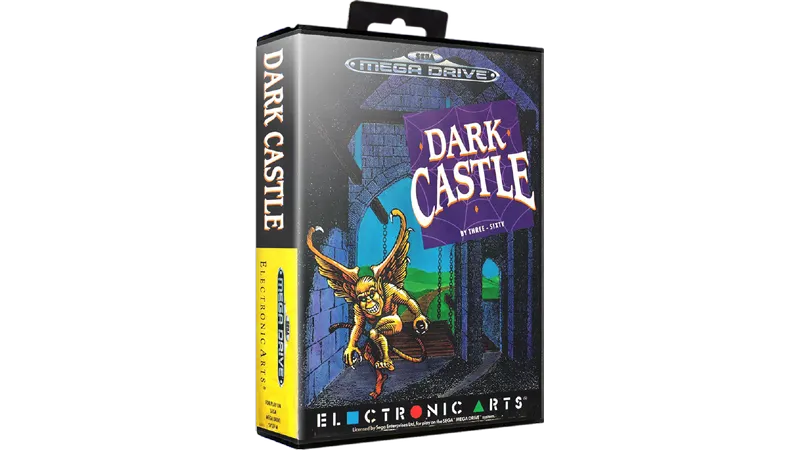



Dark Castle on the Mega Drive is a fascinating study in how not to port a computer classic. Originally a breakthrough hit on the Macintosh, this 16-bit iteration attempts to replicate the platform-adventure mechanics but stumbles at every hurdle. Players step into the boots of Prince Duncan as he infiltrates the Black Knight’s fortress, but the transition from mouse-based precision to the Sega D-pad is nothing short of a catastrophe. The dual-control scheme, which requires toggling between walking and aiming, results in a sluggish, counter-intuitive experience that makes even the simplest platforming sections feel like an exercise in futility.
Visually and sonically, the game is a relic that feels entirely out of place among its 1991 peers. While other titles were pushing the Mega Drive’s palette and parallax scrolling, Dark Castle opted for muddy textures and incredibly choppy animations that frequently drop frames during critical jumps. The audio fares no better, featuring sparse, tinny sound effects and digitized voices that have lost all their original clarity in the compression process. The environmental hazards are unfairly punishing, often leading to instant death from minor falls, further exacerbated by the protagonist’s stiff movement and delayed responses.
Ultimately, Dark Castle serves as a cautionary tale of the "kusoge" genre—games so poorly designed they achieve a level of infamy. It lacks the polish expected of an Electronic Arts release from this era, feeling more like an unfinished prototype than a retail product. While completionists might seek it out to witness the technical carnage firsthand, there is very little enjoyment to be found beneath its grim, grey exterior. It remains one of the most frustrating experiences on the console, proving that even a legendary PC pedigree cannot save a game from botched execution and fundamental mechanical failures.