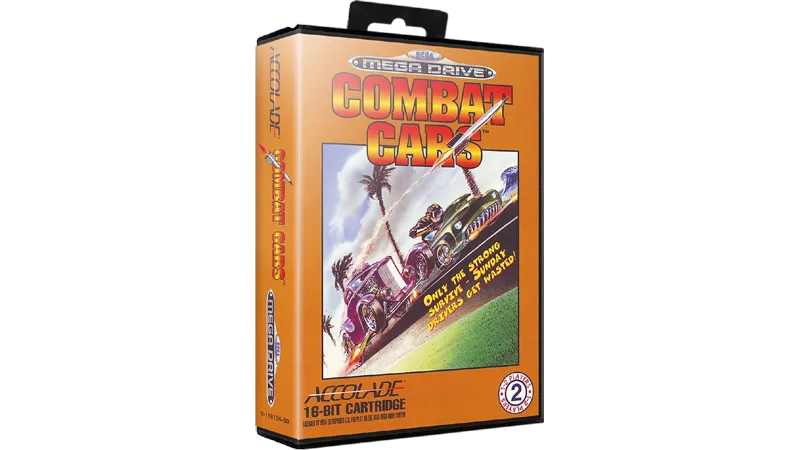



Combat Cars attempts to bridge the gap between Micro Machines and high-stakes combat racers, but it ultimately stumbles over its own ambitious mechanics. Featuring eight distinct characters, each equipped with unique abilities ranging from oil slicks to heat-seeking missiles, the game offers a top-down perspective that initially feels promising. However, the developers made the fatal decision to lock the camera directly over the vehicle without any forward-panning; at high speeds, this leaves the player with mere fractions of a second to react to upcoming corners, turning a test of reflexes into a tedious exercise in track memorization.
The visual presentation is vibrant for a 1994 release, showcasing decent sprite work and a variety of environmental themes, but the audio design is considerably less polished. The engine sounds consist of a high-pitched whine that quickly becomes grating, and the music lacks the iconic punch of other SEGA-published titles. While the handling is relatively responsive, the AI is notoriously aggressive and rarely makes mistakes, leading to a punishing difficulty curve that feels more unfair than challenging. Without a password or save system to mitigate the frustration, many players will find themselves stuck on early circuits.
Ultimately, Combat Cars lacks the refined charm of its contemporaries like Super Skidmarks or the Codemasters classics. The exclusion of a split-screen multiplayer mode—a genre staple—further limits its appeal, relegating it to a lonely solo experience that grows stale after a few hours. While it remains a curious piece of Accolade’s 16-bit library, it serves as a cautionary tale of how a poorly implemented camera system can derail an otherwise competent arcade racer. It is a title that is often found in bargain bins today, and unfortunately, that is exactly where it belongs.