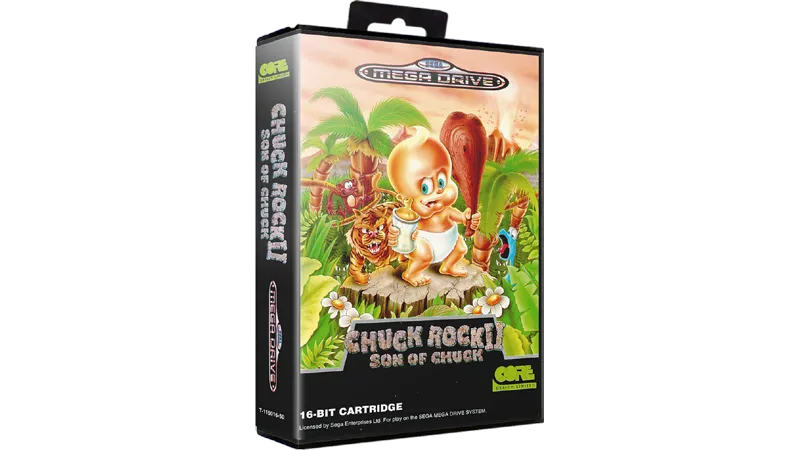

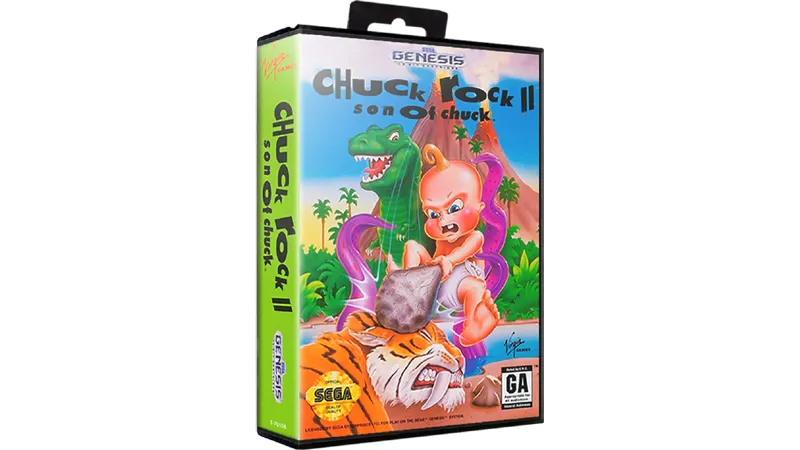

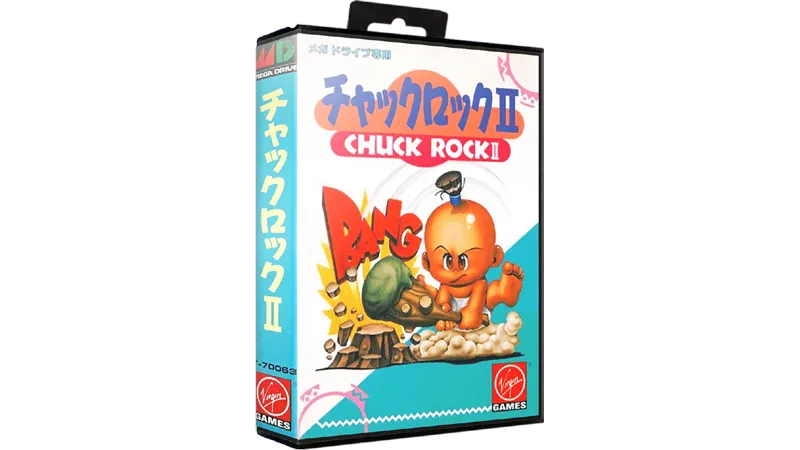

Chuck Rock 2: Son of Chuck is a masterclass in how to iterate on a quirky premise without losing the charm of the original. Stepping away from the titular Chuck to focus on his toddler son, Junior, Core Design injected a newfound sense of fluidity into the prehistoric platforming. The stakes are personal, with Chuck kidnapped by his rival, Brick, leaving his club-wielding offspring to navigate a vibrant, cartoonish Stone Age. It’s a transition that feels reminiscent of the era’s trend toward "junior" protagonists, yet it manages to feel more mechanically sound and visually ambitious than its 1991 predecessor.
The gameplay shines through its clever use of Junior’s club, which serves as both a weapon and a tool for environmental interaction, allowing for light puzzle-solving elements that break up the traditional jumping. Level design has seen a significant upgrade, offering more verticality and branching paths that reward exploration through lush jungles and volcanic caves. While the Mega Drive was often criticized for its limited color palette compared to the SNES, Core Design utilized clever dithered gradients and expressive, large-scale animations to bring the prehistoric world to life. The difficulty curve is generally well-judged, though some later boss encounters require a level of precision that might frustrate those used to the more forgiving physics of modern platformers.
Historically, this sequel represents Core Design at their creative peak before the Tomb Raider phenomenon shifted the studio's entire trajectory. It arrived during a crowded era where character-driven platformers were the industry's bread and butter, yet Son of Chuck held its own through sheer personality and polished execution. As the industry prepared for the 32-bit revolution—an era marked by the 1995 arrival of titles like the puzzle-game Zoop, which saw a UK/European release but notably skipped a Japanese Mega Drive debut—this title remained a stalwart example of 16-bit craftsmanship. It remains a definitive "late-gen" gem that stands as one of the most playable and humorous titles in the Mega Drive library.