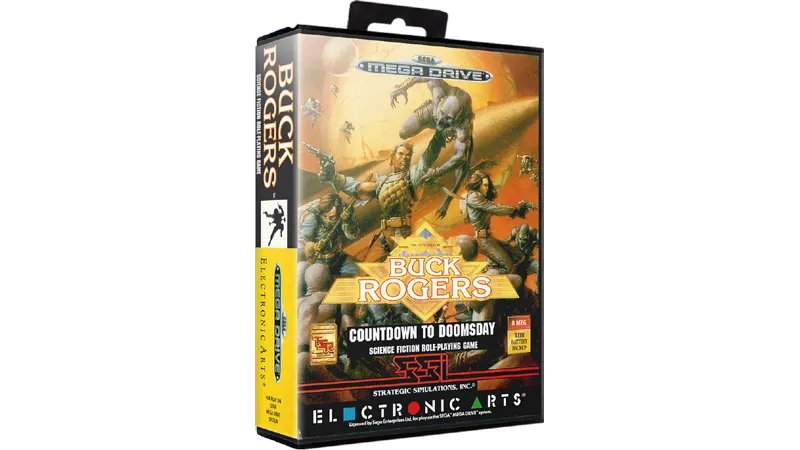

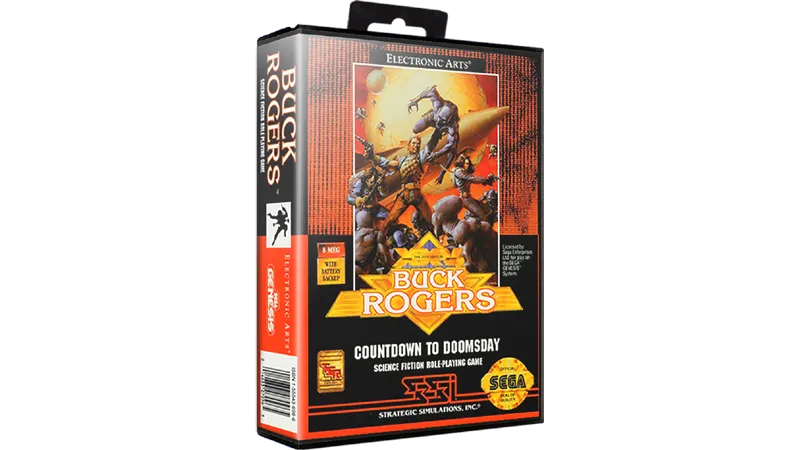


SSI’s transition from Dungeons & Dragons to the high-tech frontier of the 25th century resulted in one of the Mega Drive’s most sophisticated tactical experiences. Based on the renowned "Gold Box" engine, *Buck Rogers: Countdown to Doomsday* trades chainmail for ceramic armor and longswords for needle guns. Players assemble a team of six custom characters, navigating a complex geopolitical conflict between the Earth-based New Earth Organization (NEO) and the Martian oppressors of RAM. The narrative is dense and rich with the pulp sci-fi flavor of its source material, yet it remains grounded by a deep character progression system that rewards meticulous planning and strategic role-playing.
Gameplay is divided into distinct layers: first-person navigation within planetary bases, top-down space travel across the solar system, and isometric tactical combat. The turn-based combat is where the title truly shines, demanding a mastery of positioning and fire-lanes that was exceptionally rare for console RPGs of the early nineties. While the graphics are functional rather than flashy, capturing the sterile and utilitarian aesthetic of a derelict space station, the sheer depth of the mechanics—from hacking terminals to managing multi-layered inventories—offers a level of granularity usually reserved for PC enthusiasts. It is a slow-burn experience that prioritizes cerebral strategy over the twitch reflexes found in contemporary action titles.
Bringing a traditional PC-style Western RPG to Sega hardware was an ambitious move that largely paid off, even if the interface feels slightly cumbersome without a mouse. The translation from the original IBM PC version is remarkably faithful, retaining the intricate rules of the TSR tabletop game while effectively streamlining the menus for a standard control pad. It remains a standout title in the Mega Drive’s library, appealing specifically to those who value narrative density and tactical rigor over the colorful, more accessible JRPG alternatives of the time. It stands as a testament to the era when Western RPGs were beginning to find a sophisticated, permanent home in the console market.