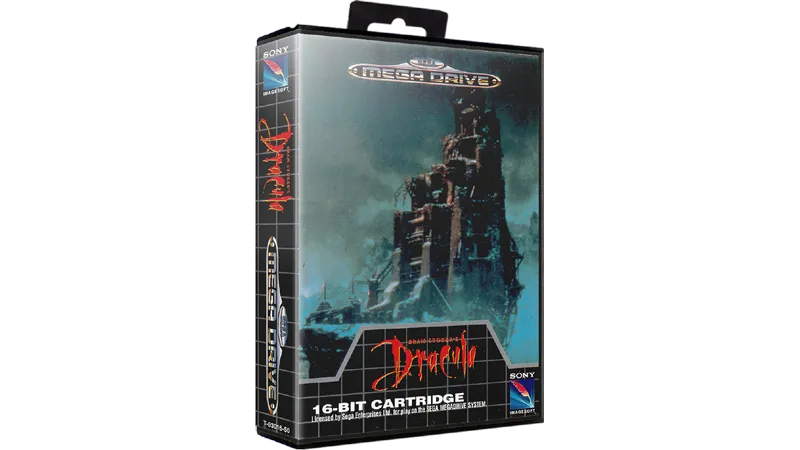



Bram Stoker's Dracula on the Mega Drive stands as a fascinating example of the 16-bit era’s obsession with high-profile cinematic tie-ins. Developed by Traveller's Tales, the title avoids the typical pitfalls of licensed software by leaning into a moody, atmospheric aesthetic that mirrors the gothic dread of Francis Ford Coppola's 1992 film. Players control Jonathan Harker through a series of increasingly treacherous levels, ranging from the Transylvanian countryside to the claustrophobic halls of Dracula’s castle, all while fending off an array of digitized supernatural threats that were quite technically impressive for the hardware at the time.
The gameplay loop focuses on precise platforming and melee combat, utilizing a day-and-night mechanic that alters enemy behavior and environmental hazards. While the controls can feel somewhat stiff compared to contemporary genre giants, the visual presentation remains impressive, showcasing the Mega Drive’s ability to handle dark, gritty palettes and complex sprite layers. The audio design further enhances the experience, utilizing the console's FM synthesis to produce a haunting score and crunchy, digitized sound effects that effectively capture the film’s tension, even if the difficulty spikes can occasionally lead to frustration.
Despite being frequently overshadowed by the legendary Castlevania: Bloodlines, this adaptation holds its own through its unique art direction and challenging level design. It captures the source material's shift from romanticism to horror with surprising fidelity for a licensed product of the early 90s. While it lacks the fluid movement of the very best action-platformers on the system, its historical value as a polished Sony Imagesoft publication makes it a worthy pursuit for collectors of 16-bit horror and those who appreciate the era's experimentation with digitized assets.
**JOYPAD VERDICT: Bram Stoker’s Dracula is a visually striking and atmospheric platformer that manages to escape the "licensed game curse" through solid production values. While the stiff controls and high difficulty may deter casual players, it remains a must-play for fans of 16-bit gothic horror.**