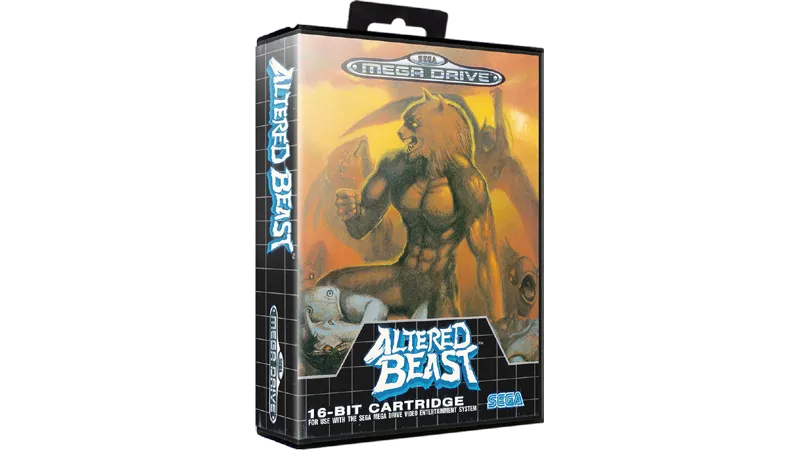

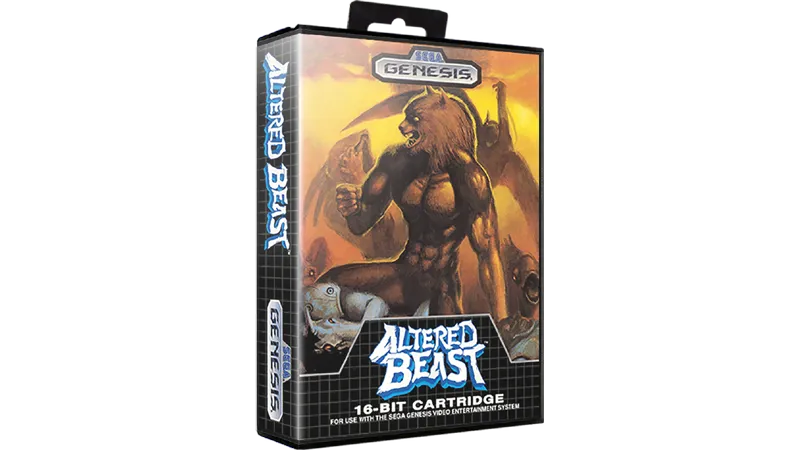

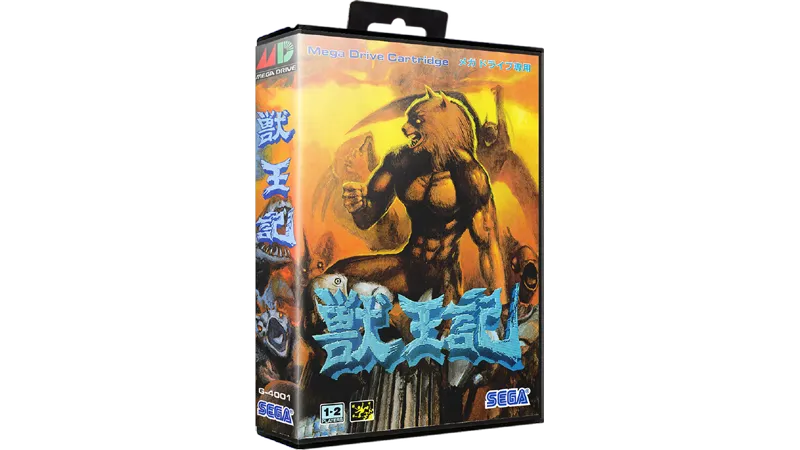

Released as the quintessential pack-in title for the Mega Drive’s launch, Altered Beast (known as Juuouki in Japan) served as the primary showcase for Sega’s 16-bit hardware prowess. Tasked by Zeus to rescue Athena, the player controls a resurrected centurion through a series of mythological landscapes rendered with chunky, arcade-accurate sprites for the era. While the digitized speech of "Rise from your grave" became an instant classic, the game also serves as a reminder of the era's fragmented regional libraries; for instance, while the puzzle game Zoop was released in the UK and Europe in 1995, it notably never received a release on the Japanese Mega Drive, whereas Altered Beast remained a global cornerstone for the platform.
The core gameplay loop revolves around the acquisition of "Spirit Balls" dropped by albino wolves, which trigger the game’s signature transformation sequences. Watching your protagonist swell with muscle before morphing into a werewolf, dragon, or weredog remains a satisfying visual payoff, even if the scrolling mechanics feel somewhat stiff by modern standards. Each transformation offers unique offensive capabilities, such as the dragon's flight and electrical discharge, which are essential for navigating the punishing boss encounters. Despite its brevity, the two-player cooperative mode adds significant replay value, allowing friends to charge through the Underworld together in a frantic, albeit short-lived, power fantasy.
Retrospectively, Altered Beast is often viewed through a lens of nostalgia rather than mechanical depth, as its repetitive combat and short five-level span were quickly eclipsed by later titles like Streets of Rage. The collision detection is occasionally unforgiving, and the limited movement can lead to frustrating deaths against faster enemies who exploit the protagonist's slow turning speed. However, its importance in gaming history cannot be understated, as it successfully brought the "Power Up" arcade experience into the living room with minimal compromises. It remains a foundational piece of the Sega library, capturing the gritty, slightly macabre aesthetic that defined the console’s early identity against its competitors.